A Blupete Biography Page

William Wordsworth
(1770-1850):
"From Sad Perplexity --
To Beauteous Forms And,
Abundant Recompense."

[TABLE OF CONTENTS]

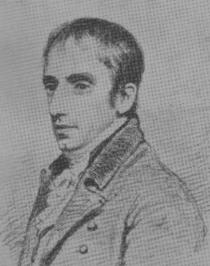
Portrait of Wordsworth
TABLE OF CONTENTS.
Introduction:
No. 1 Wordsworth's Early Days: No. 2 The Tempering Of A Poet:
No. 3 A Historical Backgrounder: No. 4 A Literary Collaboration:
No. 5 The Alfoxden Days: No. 6 Dove Cottage:
No. 7 Wordsworth's Feminine Devotees: No. 8 A Growing Family & Sorrow:
No. 9 Wordsworth / Robinson: No. 10 The Contemporary Critics:
No. 11 The Later Years: No. 12 Conclusions.
Dates. Notes.


[TOP]
[TOC]
Introduction:-

As the eighteenth century closed, and during but the first couple of decades of the next century, there arose an acuteness of apprehension or feeling as to the beauties of nature. Rousseau was the first to emphasize: the natural, the wild, the primitive, the instinctive. This Rousseauish sensibility was to spread beyond the borders of France to Germany and to England. The adherents of this romantic sensibility, while subscribing to a simplicity of manner, often displayed an exaggerated capacity for emotional response. To walk in the country with the express intention of viewing the scenery was to be was a common expression of the romantics of the age. They would take a camp stool so to sit at their favourite look offs and contemplate the scene. Often they would look away and use a mirror to see the reflection of the scene. These mirrors were known as a Claude Lorraine glass, named after Claud (of) Lorraine (1600-82), the French landscape painter. These hand held mirrors would be tinted or coloured in order to give the viewed scene, these objects of nature, a soft, mellow tinge, like the colouring of that master.

It is in the light of this romantic sensibility that we are to consider the English writers who occupied the literary stage during but a short period, a forty year period, from 1793 to 1833.1 The literary production of these writers, this eruption into the fashionable world, as Walter Bagehot observed, made an impact on English poetry and English criticism from which it will never recover.2

Though there are a number of others, to whom in due course I shall turn, William Wordsworth, the subject of this particular portrait, represents English Romanticism like no other of the age.


[TOP]
[TOC]
Wordsworth's Early Days:-

The Wordsworths came from North Country stock. Their father, John, was a lawyer who acted for the Lowther family (Earl of Lonsdale) the predominant Tory power in the region. The family lived at Cockermouth. (See map.) There were five children. Their mother, at the age of only thirty years, in 1778, was to die. Mr. Wordsworth was to find that he could not manage his family and his business all at the same time. Richard and William were sent away to school at Hawkshead; the younger brothers, John and Christopher, were to follow along. Dorothy, the only girl was sent off to her aunt, Elizabeth Threlkald who then resided at Halifax.3

William was to spend nine years at Hawkshead. His experiences there should be compared with those as were experienced by those who were to become his friends; Coleridge and Lamb. They had attended a grammar school in London, known as Christ's Hospital. The discipline at Christ's Hospital, in those days, was ultra-Spartan, the mood monastic. All domestic ties were to be put aside.4 Hawkshead was different. It, unlike Christ's Hospital, provided no accommodations, so, those that traveled afar to attend, were, of necessity, put up by certain of the townspeople.5 As for young Wordsworth, he was brought into the home of Anne Tyson, one of the dames at the school. Wordsworth had fond memories of her, and particularly of those winter nights by the Tyson fireside, as he was to describe in his autobiographical work, The Prelude. There, at Hawkshead, Wordsworth was to enjoy the natural amenities that surrounded him: on Windermere, swimming, fishing, and boating in the summer, skating in the winter; nutting in the hazelwoods; poaching for woodcock; and all those things that a boy might do in such a natural setting and while in his "glad animal days."6

In 1787, undoubtedly because of his uncle's connections -- his Uncle William Cookson being a fellow of St. John's -- Wordsworth came up to Cambridge. He spent three years there, "coming down in 1790, without sitting for his degree."7 During his three years at Cambridge Wordsworth imbibed the revolutionary views of the day; and, as it seems, like all university students, given the chance, ran up bills.

"Like S.T.C. [Coleridge] the undergraduate William ran up bills, including debts to his tutor, but without, it seems, experiencing S.T.C.'s racking qualms of conscience. Like S.T.C., also, William made acquaintance with the contemporary unorthodoxies -- the philosophy of Hartley, the polemics of Godwin and Frend, republicanism, all the current intellectual and political movements agitating the universities. Wordsworth's stance was soon Spinozistic, Necessitarian, republican. But whereas S.T.C., encountering these influences, grappled in struggle with them, weighing new ideas against the old and reasoning his way through the problems with which these new ideas confronted him, reveling in the resultant intellectual tussling (having fun with his mind, he called it), Wordsworth adopted radical intellectual and political stances with the unhesitating enthusiasm of callow provincialism in combination with a lazy mind. Coleridge, the youthful polymath, greeted new ideas as a dolphin greets new waters; plunging, leaping, sparing, drenching himself and then flinging off the glittering drops, then diving again to contend joyously with more and more strenuous depths. Wordsworth, in complete contrast, basked on the surface of ideas which he found already thrown up for him."8

[TOP]
[TOC]
The Tempering Of A Poet:-

Bills or no bills, during his third summer vacation (1790), Wordsworth somehow managed to find enough money to go off to the continent with a college friend of his, Robert Jones. They landed in Calais on July 13th and returned to England three months later. It would not appear, after that, William ever got back to his studies. That winter he was to be found in London, there to thoroughly take in all the sights.9 The following spring he was walking around Wales with his friend, Robert Jones. His family tried to get him restarted at Cambridge, that fall, in 1791; but his studies to him turned into an "immense wilderness," a wilderness he determined to escape by taking himself off to France, once again. He crossed over from Brighton to Dieppe at the end of November. After a few days in Paris he struck south to the Loire, where, at Orléans, notwithstanding his republican leanings, he was to take up with a military officer by the name of Captain Michael Beaupuy. Beaupuy was one of a band of royalists fighting, for, what was then, a lost cause. There at Orléans, too, the twenty-one year old Wordsworth was to meet Annette Vallon. Annette, four years older than William, was the daughter of a surgeon who practiced further on down the Loire, at Blois. We might suppose Annette was an enthusiast of the New Sensibility as was then sweeping France, where a woman and a man, unlike the age just past, were not afraid to show their fellowship in the new ideals, as for example, upon greeting one another, to give one another a Platonic embrace. In the case of William and Annette these Platonic embraces were soon to lead to passionate love making, and, the inevitable -- in those days -- a pregnancy. Upon the pregnancy becoming obvious, Annette's family stepped in and forbade any further meeting of the two. That autumn, the France Revolution brought about one of its more ugly scenes, in Paris, the September massacres. William was apparently there in the middle of this and had real concerns for his safety. He knew he would have to return to England but wanted, before leaving, to have a word with Annette; but, that, it seems, was impossible. He was to leave for England very late in the year but not before he did get word that Annette, on December 15th, gave birth to a daughter, Caroline.10

Back in England, Wordsworth was to hover about the channel with a view to getting immediately back to France. His biographer, Burra observed: "During the summer he had spent a month of calm and glassy days in the Isle of Wright, waiting for his opportunity which never came then; but he watched in despair the naval preparations for war."11 Wordsworth slowly and reluctantly came to see the impossibility of his situation: he would have to wait out the war. Little did he know that it would prove to be a very long wait; except for The Peace of Amiens (1802-03) during which time Wordsworth did manage to get over to see Annette and Caroline for a short time, as we will see, England and France were to be at war for a 23 year period, ending only with the defeat of Napoleon at The Battle of Waterloo in 1815. Thus we would have seen, in 1792, a dejected man, Wordsworth, leaving the southeast coast. He traveled west across England through the Salisbury Plain, where, incidently he was much moved by the visages of antiquity as is represented by that celebrated ancient stone circle, Stonehenge. From there he traveled alone, to arrive at Wales, to the valley of the Wye and the ruins of Tintern Abbey. It was in Wales he was to meet his old friend Robert Jones and together they carried on to North Wales and there to ascend Snowdon. These three scenes that Wordsworth was to take in during the summer of 1793: Stonehenge, Tintern Abbey and Snowdon -- were to make an indelible impression on our budding poet. By 1794, Wordsworth was back in his native north country to be near his family and particularly to be near his sister, Dorothy; to renew, in a sense, the "glad animal days" of his youth.

Thus, important years were to pass for Wordsworth. For him, his experiences in France and his utter despondency during that first year back in England, was to be his flaming forge: the quiet events of the following year were to temper the man into what he was to become. Wordsworth's spirit -- through the heat, pressure and cooling of these years, from 1793 to 1796 -- was to be formed into that of a poet, able to meld those parts or elements of himself to those parts or elements of that of the natural world on which he had achieved a unique perspective. De Quincey observed that it is from these years that we "may date the commencement of Wordsworth's entire self-dedication to poetry as the study and main business of his life."12


[TOP]
[TOC]
A Historical Backgrounder:-

France up to the revolution was ruled by an absolute monarch. The French court, the envy of and model for foreign courts, as the 18th century closed, was bankrupt. The French king, in order to facilitate the business of getting more money out of the people, took a gamble, and called together the States General, it had not been called upon since 1610. Thus there came together, in a legitimate body, a collection of men who were to be a majority who could now act against the ruling classes, those who gave homage to, and were favoured by, the French court. No sooner did the members of the States General (presumably mostly Parisians) take their seats, when, they defiantly proclaimed that they constituted a National Assembly; and, as such was all powerful, or, at least more so than the French king. The French Revolution ensued: the absolute monarchy and its attending aristocratic order collapsed. In July of 1789, the storming of the Bastille took place, after which Louis XVI recognized the legal existence of the Constituent Assembly, - as the new National Assembly was called. The assembly adopted the "Declaration of the Rights of Man,"13 and drafted a new constitution, one that did allow for a limited monarchy, such as had existed in England since 1688.14 The French king was not much impressed with these developments and was of the view that the Ancient Régime should but continue: it was not to continue. On January 21st, 1793, as part of its ongoing revolutionary activities, those then in charge of France beheaded Louis XVI. In London, George III, aghast, having sent the French ambassador packing, severed diplomatic relations with France. France invaded England's ally, Holland, and, on February 1st, France declared war on England. Austria, Prussia, Spain, and Britain formed an alliance against France (the "First Coalition"). Prussia was to retire after it gobbled up Poland; Spain was to make peace (July 1795); and, large parts of Holland and Belgium received France as a friend. This war, according to Burke was not a regular war between nations; but rather a war of all civilized nations (including the overthrown government of France) against Jacobins. "Whatever were the first motives to the war among politicians, they saw that in its spirit, and for its objects, it was a civil war; and as such they pursued it. It is a war between the partisans of the ancient civil, moral and political order of Europe against a sect of fanatical and ambitious atheists which means to change them all. It is not France extending a foreign empire over other nations: it is a sect aiming at universal empire, and beginning with the conquest of France."15

In England, the reaction to the goings on in France, at first, were mixed; but the majority, especially when the abuses of the French Revolution were recognized, were ready to support the French Royalists.

The English historian, John Richard Green:

"The cautious good sense of the bulk of Englishmen, their love of order and law, their distaste for violent changes and for abstract theories, as well as their reverence for the past, were rousing throughout the country a dislike of the revolutionary changes which were hurrying on across the channel; and both the political sense and the political prejudice of the nation were being fired by the warnings of Edmund Burke. ... [Burke hated] a revolution founded on scorn of the past, and threatening with ruin the whole social fabric which the past had reared; the ordered structure of classes and ranks crumbling before a doctrine of social of social equality; a state rudely demolished and reconstituted; a church and a nobility swept away in a night."16
There were, of course, people in England, while regretting the blood and destruction of the French Revolution, nonetheless supported the principles for which it stood. These principles were best summed up in Rousseau's expression: "Man is born free; and everywhere he is in chains!" And, the Rousseauish cry: "Liberty, Equality, Fraternity." Most all of the young intelligentsia of the age (for that matter of any age) were for change; after all, was not the existing state, unfair; where is the justice in the existing system; things need be set right. These notions were meat and drink to all of the young poets of the age, including William Wordsworth.

In England, in 1793, a political book, like no other, before or since, was to come off the presses. It was Enquiry Concerning the Principles of Political Justice, or, more simply, Political Justice by William Godwin. It burst upon the scene as a major piece of sedition.17 It was an attack on aristocracy, property, religion, and even the sacrament of marriage. In 1793, the trials of the "Reform-martyrs," one of whom was Thomas Muir (1765-99) were to unfold. The lot of them were convicted and transported to Botany Bay. In 1794, there was to be the "Trial of the 12 Reformers": Thomas Holcroft, Horne Tooke, Thomas Hardy, John Thelwall and others were brought to trial on the charge of high treason, and, acquitted amid much excitement. These trials were part of the larger government effort to prosecute editors, nonconformists and radicals who were arguing for Parliamentary reform. England, however, was at war; and reform, indeed, even the liberties of the people18 were to take second place to the grand effort of making England victorious. And, victorious she was to be, due mainly to her superiority upon the oceans of the world.


[TOP]
[TOC]
A Literary Collaboration -- Wordsworth and Coleridge:-

As the year 1794 passed, Wordsworth was to be with his family, and, I should think with his mother's family, the Cooksons at Penrith. (See map.) It was at Penrith, as the year closed, that he came to find himself nursing a dying friend who had been at Cambridge with him, Raisley Calvert. In January, 1795, Calvert died and left an inheritance to Wordsworth, an inheritance which enabled Wordsworth to set out on his life's career which otherwise would not have been possible.19 He determined, too, at this point, that in life's journey his sister Dorothy was to be his fellow traveler.

It was during the years, 1794-5, that a very close relationship was to spring up between William Wordsworth and his sister, a relationship unique in the literary world, one that continued until Wordsworth's death, in 1850. For many long hours, at this point, in 1794, William (then 24) and Dorothy (then 22) were to discuss what it was that William was to do with his life. What was clear to Wordsworth was that, "All professions are attended with great inconveniences."20 With the Calvert legacy Wordsworth was able to put off his decision as to what he should do to make a living. The decision that William and Dorothy made, now that they could afford to do so, was to live together in a secluded country cottage. As it happened, a friend offered them just such a place, Racedown Lodge, near the Dorset coast. In September of 1795 the Wordsworths took up their residence at Racedown. There William Wordsworth turned to what was to be his life long activity: the writing of poetry.

One of the most famous literary collaborations, ever, was that of Wordsworth and Samuel Taylor Coleridge. When these two first met is a question21 which likely cannot be answered; by 1797, we are able to see that Coleridge was paying a visit to the Wordsworths at Racedown. Upon meeting Coleridge, the Wordsworths were electrified. We are not to be surprised by this, as Coleridge charmed everyone, at least at first. Henry Crabb Robinson was to write in his diary, "On politics, metaphysics and poetry, more especially on the Regency, Kant, and Shakespeare he was astonishingly eloquent." Concerning this first meeting, Dorothy was to get a letter off to her friend Mary Hutchinson. The first thing, as Dorothy was to explain was William's reading of his new poem The Ruined Cottage, with which Coleridge was much delighted, and, "after tea he [Coleridge] repeated to us two acts and a half of his tragedy Osorio. The next morning William read his tragedy The Borderers."22

The Wordsworths were enthralled with Coleridge; and so he with them. There were, during the spring of 1797, two or three visits back and forth.23 Coleridge was then living at Nether Stowey, a Somerset village, under the patronage of the local tanner and literary enthusiast, Tom Poole (1765-1837). Coleridge returned from one his trips to the Wordsworths on June 28th. There, at Nether Stowey, he was to tell his friends, with much enthusiasm, about the Wordsworths; such, that he returned travelling the fifty mile distance to Racedown and reappeared back to Nether Stowey on July 2nd with the Wordsworths in tow. Now, as it happened, Charles Lamb was to come up from London to pay his old school chum, Coleridge a visit. So, within days of the Wordsworths' arrival at Nether Stowey in came Charles Lamb and his sister. Thus there was to be quite a crowd in the little cottage occupied by the Coleridge family (Coleridge, Sara and their one year old Hartly), the Wordsworths, Charles Lamb and his sister. They were all somehow fitted in to the small Coleridge cottage at Nether Stowey. There was to be some relief when the Lambs returned to London, as they had intended to do. The Wordsworths seemed to have little reason to return to Racedown and were quite happy to continue on at Nether Stowey. What the Wordsworths wanted were new accommodations, somewhere near the Coleridges at Nether Stowey. Through the good offices of Tom Poole24, benefactor and friend to this growing clutch of literary luminaries, a large home was to be rented. It was located nearby at Holford Glen, a Queen Anne mansion which was known as Alfoxden. The Wordsworths, who likely still had a sizable portion of the Calvert legacy left, signed a one year lease for the sum of £23 and during July of 1797, the Wordsworths moved to Alfoxden: As Dorothy Wordsworth was to describe, "a large mansion with furniture enough for a dozen families like ours."


[TOP]
[TOC]
The Alfoxden Days:-

With the new year, 1798, the English were feeling glum. Napoleon had successfully invaded Italy, and Spain had joined sides with France. The Austrians, who had stood up to France, retired from the field. France was left without an enemy on the continent, and England without an ally. England, fearing an invasion, withdrew her ships from the Mediterranean, which was thus to become a "French Lake" from January 1797 to May 1798. These were dark times, and the average Englishmen could see French spies everywhere. The regular sort of person that lived around or at Nether Stowey were sure that they had some in their midst. It was that strange group at Alfoxden as headed up by the newcomers: they had to be spies! Soon there was to be a surreptitious, but close watch on the Wordsworths and those who came to visit. The mansion, apparently came with a few servants; one of them was a female by the name of Mogg who was very suspicious of the new tenants. They talked differently, and to Mogg, this Somerset servant, unfamiliar as she apparently was with the manner and speech of those from the north of England, concluded these tenants must be from France. And they certainly behaved like Papists; why, they cleaned their clothes on Sunday; and, they had the morals of the Continentals, viz., "the master of the house had no wife with him, but only a woman that he tried to pass off as his sister." The Wordsworths and their friends also had this habit of going about in the countryside with their friends, making observations and writing in notepads which each had ready at hand.25 Something very sinister was going on here, as, Mogg dutifully reported.26 Word was to get back to the authorities in London about this bunch at Alfoxden and the report was not taken lightly, as there was sent out from London a government agent by the name of Walsh, who, during these times was to keep a watch on these strange people, viz., Wordsworth, Coleridge and friends who were gathered there together at Nether Stowey.27 All of this did not much bother these Rousseauan romantics28; the "Alfoxden Circle" "passed the wonderful summer of 1797, with almost ceaseless laughter and high spirits, constant visits, talk and sociability, love and warm happiness, excitement and buoyancy."29

The "Alfoxden Circle" was to lose one of its more illustrious members for a time, as Coleridge, desperate for money to support himself and his family had determined to take up a position as a Unitarian minister. A position opened up for him at Shrewsbury, so, there he went to take up his ministry. Coleridge, however, was not to spend much time at Shrewsbury, as, not too long after he left Nether Stowey, a gift of money was to be made to him. The Wedgwoods, in their continuing effort to support the arts, gave a life annuity to Coleridge of £150 per year with no conditions. Such a gift however was not to keep Coleridge at Nether Stowey, as he longed to travel to Germany for further studies. Doubtlessly these plans were discussed with the Wordsworths and a determination was made; all three would travel together to Germany, once the one year lease30 of Alfoxden was up, viz., the end of June, 1798. It was during this time, it hardly needs to be mentioned, that the two poets collaborated on their work, Lyrical Ballads, the manifesto of English Romanticism.

Before leaving for Germany, Wordsworth and Coleridge saw to the final arrangements in respect to the publication of Lyrical Ballads. These arrangements required, for the most part, their attendance at Bristol where a Bristol bookseller, Joseph Cottle (1770-1853) was putting the book through the presses. (They did, during that summer, make a trip to Wales at which time Wordsworth wrote one of his most popular poems, "Tintern Abbey," written on July 13th, 1798.) By late August the party headed for London there to make their final preparations for their trip to Germany. On September 16th, Dorothy and William, together with Coleridge and a friend of theirs, John Chester, set sail for Germany from Yarmouth arriving at Hamburg on the 19th.31


[TOP]
[TOC]
Dove Cottage (1799-1808):-

Within 10 days of their arrival at Germany the Wordsworths decided to separate from their companions. We know more about Coleridge's stay in Germany (he stayed until July, 1799); but, as for the Wordsworths, we know little of their travels in Germany. As mentioned they had arrived in September, 1798, and it would appear they were quite prepared to leave before the year was out, but a severe winter on the continent encumbered travelers. The Wordsworths were to spend a number of weeks at Goslar. There, at Goslar, few "books were accessible, and the result was a period of great activity in composition."32 Upon the winter breaking up the Wordsworths were on the move again and were to eventually find their way to the coast and then back to England, arriving there, it is thought, in April of 1799.33

It is well, now, to consider events on the continent. Napoleon had managed to slip back from Egypt (autumn of 1799). France was then to make him First Consul (dictator) and the little general re-energized her. Italy was then taken which led to the "Second Coalition" (England, Austria, and Russia) to break up; with this, England was once again left, alone, to deal with France. Indeed, for a few months during the winter of 1800-01, there was formed a league against England; the league consisted of Prussia, Sweden, Denmark and Russia. This "was caused partly by the whim of the Czar Paul [and] partly by two feelings then prevalent in the Courts of Europe, fear of France and jealousy of English naval power."34 With Nelson's capture of the Danish fleet at Copenhagen in April, 1801, this league against England shortly came to an end.

Once in England, in April of 1799, William and Dorothy, having apparently no particular plan in mind, headed north to Stockton-on-Tees, six miles from Darlington to a farm run by Tom Hutchinson, Mary's brother; Mary was staying there. That October, at William's invitation, Coleridge was to arrive at the Hutchinson farm. Plans were soon laid for a trip west, to the Lake District, to the countryside known by Wordsworth in his youth. "From Temple Sowerby they made their way to Bampton, from Bampton along Hawes Water to Windermere and Hawkshead."35 From Hawkshead, Wordsworth and Coleridge wondered to Rydal and then to Grasmere. (See map.) At Grasmere they discovered, on the coaching road descending from Ambleside into Grasmere, a cottage for rent, formally an inn, "The Dove and Olive Bough." Wordsworth, then and there, made the determination that should be his new home.36 Having left Coleridge earlier in his travels, Wordsworth returned to the Stockton farm to tell Dorothy of his find.37 Travelling mostly by foot in December, Dorothy and William made their way to Grasmere, arriving there on the 20th. They then moved into Dove Cottage; a place that was to be their home for better than eight years.

Catherine Macdonald Maclean of University College, Cardiff, in her book on Dorthy Wordsworth, takes up the subject of Dove Cottage, Professor Maclean:

"The cottage, which was only a few feet off the road, stood above the lake. Behind it were the towering masses of Nab Scar. The orchard itself was but a slip of the mountain, enclosed and cultivated. It sloped upwards from the house so that from the top of it they could look right over the roof and see the lake. They had a view of the church and Helm Crag and more than two-thirds of the vale. Dorothy instantly built in her imagination a seat and a summer hut in this lofty and gracious place. She clothed the front of the cottage with honey-suckle and roses.38 ...
Dorothy found that much had to be done before the cottage would be comfortable. One of the rooms upstairs smoked like a furnace; some of the doors had to be mended; most of the rooms needed painting and papering; there was endless sewing to be done. ...
Soon the cottage was made neat and comfortable within-doors. To Dorothy it seemed to have only two serious disadvantages. It was very near the road, and it was so built that sounds passed very distinctly from one part of the house to another."39
A more contemporary description of Dove Cottage is that which was given by de Quincey in his reminiscences. He was to first view it when he met the Wordsworths in August of 1807. De Quincey, incidently, was to become intimately acquainted with Dove Cottage, as, after the Wordsworths left it in 1808, it was to become his home for a period of time.
"A little semi-vestibule between the two doors prefaced the entrance into what might be considered the principal room of the cottage. It was an oblong square, not above eight and a half feet high, sixteen feet long, and twelve broad; very prettily wainscoted from the floor to the ceiling with dark polished oak, slightly embellished with carving. One window there was -- a perfect and unpretending cottage window, with little diamond panes, embowered at almost every season of the year with roses; and, in the summer and autumn, with a profusion of jasmine and other fragrant shrubs. From the exuberant luxuriance of the vegetation around it, and from the dark hue of the wainscoting, this window, though tolerably large, did not furnish a very powerful light to one who entered from the open air."40
De Quincey was to also give us a glimpse into Wordsworth's diminutive studio as was located upstairs in Dove Cottage. "I was ushered up a little flight of stairs, fourteen in all, to a little drawing-room, or whatever the reader chooses to call it." In it, like most living rooms of the day, there was to be found a fireplace. This upstairs room, itself, "was not fully seven feet six inches, and, in other respects, pretty nearly of the same dimensions as the rustic hall below. There was, however, in a small recess, a library of perhaps three hundred volumes, which seemed to consecrate the room as the poet's study and composing room; and such occasionally it was."41

The taking up of his residence at Dove Cottage heralded a new stage in Wordsworth's poetry writing. It was to be during these days at Dove Cottage that Wordsworth was to write some of his most charming poems of flowers, birds, and butterflies. On April 6th, 1800, Coleridge arrived at Dove Cottage. He had come back from Germany arriving some months after the Wordsworths (July, 1799). By this time Coleridge's family problems were becoming more serious; and, it seems, when the heat was on, one of the places to which Coleridge would run, was, of course, the Wordsworth's; who, always welcomed him and were to make little or no reference to his problems, the principle one being, of course, Coleridge's long standing opium habit. The main reason Coleridge was to spend some time with the Wordsworths, that spring of 1800, was to assist Wordsworth in the putting together of the 2nd edition of Lyrical Ballads.42 So, too, at Dove Cottage, there was to be found William's brother, John, who was then there for a visit. So, too, Mary Hutchinson was there for a period of time.43 By May 4th, Coleridge left the Lake District in order to see the publishers at Bristol. After Bristol, Coleridge went back to his family, still, I believe at Nether Stowey. Things were patched up sufficiently, such that, on June 29th, Coleridge arrived in the Lake District with his family -- Sara (seven months pregnant with Derwent) and four year old Hartley. On July 23rd, the Coleridges were to take up residence at Greta Hall, Keswick, locate some thirteen miles or so from Grasmere. (See map.)


[TOP]
[TOC]
Wordsworth's Feminine Devotees -- Dorothy And Mary:-

Dorothy was 21 months younger than William. She was to lose her mother at age six, her father at eleven. She was separated from her brothers and sent to live with her mother's relatives. Many women of the age, of the ages, share the desires and impulses of the male head of their household. The effect of leaving the business of raising a young impressionable girl by a maiden aunt, Elizabeth Threlkald, is a question we must leave for the psychologists to answer, supposing that they would have enough information to go on. With no father and having been separated from her brothers since the age of six, at the age of fifteen, now a young woman, Dorothy was reintroduced to her brother, William: she fell in love with him, it was to be a deep and an abiding love which was to last a lifetime.44 William, as we have seen, was off to university (Cambridge) in 1787; and, beginning in 1790, was traveling around quite a lot, including being in France for a year in 1792. After wondering around England, in particular through Wales, it will be recalled that William returned, in 1794, to the lands he knew as a boy. It is at this point that we may see the beginnings of the close and lifelong relationship as did exist between William and Dorothy. In September of 1795, they determined to live with one another, moving into their first little cottage at Racedown, Dorset. They continued to live together until William's death in 1850. The Wordsworth relationship, became a threesome, when, in 1802, William married Mary Hutchinson.

William likely first met Mary when she was but young, at dame school, at Penrith.45 It seems, however, that the childhood friendship was more between Dorothy and Mary, a friendship that was to continue throughout their lives. As has been seen, during their adulthood, Mary and Dorothy were to pay regular visits with one another; and, because of the distances and the difficulty of travelling in those days, these visits would last for weeks on end. When Dorothy and William took up living with one another, these long visits continued, with Mary spending considerable periods of time with both William and Dorothy, beginning in 1795, at Racedown and then, after that, at Dove Cottage at Grasmere. In 1802 -- likely inspired by the delightful Coleridge children that now lived nearby -- William and Mary married. Thereafter, brother/husband, sister and wife lived together, first at Dove Cottage and then at Allan Bank (1808) and then, for the balance of their years at Rydal Mount (1813): this arrangement worked wonderfully for all three of them.

Earlier we set forth de Quincey's description of Dove Cottage. Just after giving such a description, he was to move along to then describe how he was to meet two ladies in the cottage. One, "a tallish young woman, with the most winning expression of benignity upon her features ... so frank in air" and, as de Quincey was to observe, "the native goodness of her manner." De Quincey is here describing Wordsworth's wife, Mary. She was "neither handsome nor even comely ... nay, generally ... very plain --

... compensatory charms of sweetness all but angelic, of simplicity the most entire, womanly self-respect and purity of heart speaking through all her looks, acts, and movements. Words I was going to have added; but her words were few. ... In complexion she was fair, and there was something peculiarly pleasing even in this accident of the skin, for it was accompanied by an animated expression of health, a blessing which, in fact, she possessed uninterruptedly."46
Coleridge adored Mary, his "beautiful green willow." Keats described her as Wordsworth's beautiful wife. De Quincey concluded his remarks by describing Mary Wordsworth as having, "a sunny benignity -- a radiant graciousness -- such as in this world I never saw surpassed" -- such glowing praise. Wordsworth's biographer, Burra, writes: "[Mary] ... served him and protected him, urged him to his poetry, and attended its labour through nearly fifty years of their lives. Writing his letters, copying his poems, nursing Dorothy, keeping the house, she served him with absolute devotion yet lost nothing of her own character, and gave him equally the wit and the criticism which was almost as useful as her love."47

As for Dorothy: well, de Quincey sung her praises, too. Dorothy, in the physical comparison, was “shorter, slighter.” Unlike most English women, she was of dark complexion, her “face was of Egyptian brown.” There was something about her eyes. There was for de Quincey something in them, wild and startling, and hurried in their motion. As for Dorothy’s personal characteristics, well, they were quite different from that which de Quincey observed in Mary.

"Her manner was warm and even ardent; her sensibility seemed constitutionally deep; and some subtle fire of impassioned intellect apparently burned within her, which, being alternately pushed forward into a conspicuous expression by the irrepressible instincts of her temperament, and then immediately checked, in obedience to the decorum of her sex and age, and her maidenly condition, gave to her whole demeanour, and to her conversation, an air of embarrassment, and even of self-conflict, that was almost distressing to witness."48
Coleridge was to write of Dorothy just shortly after he met her in 1797, in the following terms:
"She is a woman indeed! -- in mind, I mean, and heart -- for her person is such, that if you expected to see a pretty woman you would think her ordinary -- if you expected to find an ordinary woman you would think her pretty! -- But her manners are simple, ardent, impressive ... and her taste a perfect electrometer -- it bends, it protrudes, and draws in at subtlest beauties and most recondite faults."49
During the summer of 1810, Henry Crabb Robinson, on a visit back to his home town, Bury, was to meet Dorothy Wordsworth, who at the time was staying with the Clarksons. This meeting led to an invitation to Rydal Mount which Robinson took up visiting the Wordsworths in November of that year. Of Dorothy Wordsworth, Robinson was to write: "Miss W. without her brother's genius or productive power, had all his tastes and feelings, and he was in his youth and in middle age as warmly attached to her as late in life he became attached to his daughter, no one rivalling them in his affections except his admirable wife."50

With the signing of the Treaty of Amiens on May 25th, 1802, the hostilities between France and England were brought to an end, albeit, only temporarily.51 The Wordsworths were to take advantage of this lull so to make their way to France and to visit Annette and Caroline. Leaving Grasmere on July 9th they were to stop by for a visit with Coleridge (Greta Hall) and the Hutchinsons (Gallow Hill). William and Dorothy were to stay in France for a month.52 The purpose of the trip, plainly, was to get Annette's blessing on an intended marriage.53 The Wordsworths arrived back at London on August 30th. On October 4th, 1802, William Wordsworth married Mary Hutchinson, at Brompton. By October the 6th the three Wordsworths were settled in at Dove Cottage: William, Mary and Dorothy. Coleridge was to observe of Wordsworth, it seems somewhat enviously: "living wholly among Devotees -- having every minutest Thing, almost his very Eating & Drinking, done for him by his sister, or Wife."54 The following year, on June 18th, Wordsworth's first child, a son, John is born.


[TOP]
[TOC]
A Growing Family & Sorrow:-

Thus we see William Wordsworth in a happy state; he has income and leisure; and two women, Devotees who attend to his minutest requirements. This state was to generally continue for the rest of his days, days which were broken up into two principal activities: the one, wondering the pathways overseen by the imposing hills of his beloved Lake Country; and the other, in composing poetry about that which he sees around him.

The Wordsworth household, consisting of brother, sister and wife was soon to grow.55 On June 18th, 1803, the first child came along, John. Richard (William's older brother) and Dorothy were to stand together as godparents at the little church nearby in what was rather an insular ceremony. Before the summer was out, on August 14th, leaving mother and child at home, Dorothy and William, were off for a tour of Scotland.56 Their bosom friend, Coleridge, was to join them. All went well for a couple of weeks, when Coleridge left his companions and returned on foot by himself to his home (Greta Hall) arriving there on September 15th. It seems that it was during this trip that Wordsworth was to finally let go at Coleridge for his opium habit.57 The Wordsworths knew of Coleridge's weakness for drugs, but they said nothing; I guess they might have thought that Coleridge's wife, Sarah said enough for all. But for some reason, Wordsworth, on the first part of their Scottish trip, lost his patience with Coleridge. It was the first real rent in the Coleridge/Wordsworth friendship; it was downhill thereafter; by 1812 this rupture was to become "profound and complete."

Coleridge's problem was known to family and close friends. Coleridge excused himself, saying simply that he was not well and needed the opium for pain relief. His wife was beside herself, and, was at this point making appeals to her brother-in-law, Southey. (Coleridge and Southey had married two of five beautiful sisters, the Fricker sisters. Coleridge married Sara (1770-1845) and Southey married Edith (1774-1837).) In any event, on September 7th, 1803, the Southeys moved into Greta Hall. Robert Southey, thereafter, was to be the principal support of Sara Coleridge and her children. But these events I take up in greater detail when I come to my biographical sketch of Coleridge.

On February 6th, 1804, Wordsworth's younger brother, John, age 33, a captain of an India Merchant Ship, Earl of Abergavenny, who had spent a considerable amount of time with William and Dorothy, especially in 1800, much loved, lost his life when his ship was wrecked off the south coast of England, Weymouth. All on board were lost. John was to be described as "a poet in everything but words." He was "the adored friend of everyone who knew him."58

Though the sad news of John's death shocked them all, the normal state of happiness of the Wordsworth household was to soon return. On August 16th, 1804, the very year they were to lose John, Wordsworth's second child, Dora was born. Dora was followed, on June 16th, 1806, by Thomas, the third child born to the Wordsworths, so to join three year old John and two year old Dora. Notwithstanding that parts of the household, at times, were noisy, William continued on with what was his occupation, the writing of poetry. His inventory of poems had built up considerably, such that, in May of 1807, Wordsworth's poems are published in two volumes. Things were looking much better, and, needing more room for their growing family, in June of 1808, the Wordsworths moved into their new home, Allan Bank, Grasmere.59 Another reason that they took a larger place is that it was expected that Coleridge would come to live with them; which, apparently, he did. During the weekends, Allan Bank was to become a very busy abode, indeed. At times there was as many as seven children (three visiting Coleridges and four Wordsworths). Sara Hutchinson, who was now, it would appear part of the Wordsworth household (Mrs. Wordsworth's sister, a lady whom Coleridge was much interested in), was to remark that when Coleridge played with the children, S.T.C. made "enough racket for twenty."60 By June 1810, however, Coleridge, fond of his comforts left Allen Bank (the Wordsworth residence, apparently, was usually in a bit of a rough state; though it never seem to bother them). Coleridge's principal interest, however, it seems plain, while at the Wordsworths, was that he was to be in the good company of Sara Hutchinson. Sara, for her own reasons (I suggest that it was simply because she just could not take Coleridge anymore) had left Allan Bank to return, I think, to her brother's farm in Yorkshire. Coleridge was thus to move back in with his wife at Greta Hall; it was a cohabitation which was to last only about five months. Coleridge took advantage of an offer coming from friends of his, the Montagus -- who were just then visiting -- to return to London in their carriage and reside with them. Though we will never know exactly what transpired, Coleridge in his conversations on the long ride to London with Montagu determined that Wordsworth had been bad-mouthing him (Coleridge) behind his back. Thus, the breach in the Coleridge/Wordsworth relationship that can be traced back to 1803 when they had travelled to Scotland together, in 1810, opened up, such that their relationship was never thereafter to be the same. Over the next two years, the quarrel between the two poets became a cause célèbre.61

The year 1812 was to prove to be another sad year for the Wordsworths. First off they came to hear that Coleridge actually was back in the Lake District, for what was to be a rare visit with his family. Greta Hall was but thirteen miles from Allan Bank. Surely, Coleridge would come down to pay them a visit and renew their relationship. The Wordsworths waited expectantly at Grasmere; but Coleridge did not show. The sorrow to the Wordsworths that the relationship that they had with Coleridge had come to an end, was, however, totally eclipsed, when two of the Wordsworth children, that year, in 1812, were to die: four year old Catherine62 on June 4th, and six year old Thomas on December 1st. There were then left, at this point, to recount, three children: nine year old John, eight year old Dora, and two year old William.

In March of 1813, Wordsworth, through the influence of the powerful Lowther family receives an appointment as the Collector of Stamps for Westmorland; with it came £400 per year.63 This additional money allowed the Wordsworths to make a move that they had contemplated since they first took up residence at Allan Bank five years earlier. They had continually complained about the smoking chimneys at Allan Bank to its landlord but nothing apparently was done about the problem. The very month that Wordsworth received his appointment as the Collector of Stamps, the family moved to Rydal Mount64. It was "two miles away on the Ambleside road, [and] which he rented from the widowed Lady Fleming. The house had superb views, was surrounded by a magnificent wild garden of the kind Dorothy loved, and was a "gentleman's house." It remained Wordsworth's home until his death 38 years later in 1850."65

Throughout these years, Wordsworth continued to write poetry. Indeed, in March of 1815, Wordsworth's "first collected Edition of his works" was to appear. The Wordsworth home was always open to friends and admirers. Thomas de Quincey, would have been a regular visitor66, for, as of 1809, he was a resident of Grasmere, indeed he was to move into "Dove Cottage."67 With his growing popularity, visitors would regularly come up from London. Charles Lamb together with his sister, would come up on holidays. So, too, would Crabb Robinson (Robinson and Wordsworth were to become the best of friends). Other luminaries of the age arrived at Rydal Mount, including Walter Scott and William Godwin. One memorable visit made by Godwin, was that made during April 27th & 28th, 1816. While there at Rydal Mount, Wordsworth and Godwin were to have "a fearful quarrel about Waterloo." Godwin, like his followers (Hazlitt, Byron and Shelley), saw it as a catastrophe for progress: whereas Wordsworth and Southey saw it as the putting down of the monstrous ambitions of one man and his deluded supporters) -- Godwin quit Wordsworth, as Robinson was to report, "with very bitter and hostile feelings."68

As we have seen Wordsworth began his continental travels early. Leaving university behind, but twenty years of age, he made a tour of the continent with his friend Robert Jones. Wordsworth loved to travel and did so throughout the whole of his life. He made a number of trips to Scotland, there to visit Scott. He traveled to the continent during the years: 1820, 1823, and 1828. His trip of 1820 was to run on for three or four months (July-November). On this trip he had with him: Dorothy, Mary, Mr. and Mrs Monkhouse, and Crabb Robinson. When in Paris Wordsworth paid a visit to Annette and Caroline (by then married). His 1828 trip, Wordsworth was to tour the Rhine with Dora (then 24 years of age) and, interestingly, with Coleridge. During 1837, Wordsworth was to make his last continental tour. He was then to travel, again, with his friend, Crabb Robinson. In Italy they paid a visit to the graves of Keats who died at age 26, and Shelley who died at age 30. Keats and Shelley were very much alive to the social and political questions of the time, and, dying young, were to do so with Rousseauian beliefs yet in their hearts. Like Wordsworth and Coleridge, in their time, Keats and Shelley made imagination the supreme gift so that "what the Imagination seizes as beauty must be truth." There, stood Wordsworth and Robinson, in an Italian grave yard, Wordsworth 67 years of age, Robinson, 62. While Keats and Shelley died with romantic hopes; Wordsworth and Robinson, growing old had gradually traded their romantic beliefs for the practical realities of the world. A retrospective story of the romantic poets of the early 19th century might be told with this grave side scene. But I must break away from this sad reverie and write a few words about the relationship of these two men: Wordsworth and Robinson.


[TOP]
[TOC]
Wordsworth's Relationship With Crabb Robinson:-

Henry Crabb Robinson's biographer, Edith Morley:

"Crabb Robinson became a familiar friend of the whole Wordsworth household, a constant visitor to Rydal, and an intimate with all who frequented the Mount. He travelled with Wordsworth on various occasions - in Wales, in Scotland, in Switzerland, Germany, and Italy. The friends met in Herefordshire at the home of Miss Fenwick's relatives, and in London, where they visited in the same houses. They heard frequently from each other by letter when they were separated, and their respect and love for each other increased year by year."69
Morley continues and points out that Wordsworth owes, in no small measure, his fame to the tireless promotional activities of Crabb Robinson. The fact of the matter is that Wordsworth's poems in the early days were not read at all. "At home and abroad, in writing and in conversation, by gifts of the poems, by quotation and by exposition, Robinson did what could be done by heart-felt praise to make converts to the poetry he was among the first to estimate justly." Robinson's message to all who would listen was the same: Wordsworth was "the greatest man now living in this country." Robinson's admiration was not, however, uncritical. "He saw the weaknesses of Wordsworth's work just as he saw faults and his narrowness as a man."70 The two men were "fundamentally opposed in their religious outlook and in their political views," subjects which both men took very seriously. Wordsworth was an orthodox member of the Church of England, "who could not tolerate talk of church reform"; Robinson was a Unitarian.71 Robinson was part of emerging liberal movement, a Whig; Wordsworth, while very much a revolutionary in his younger days came around to be very much the Tory and supported the aristocratic establishment: to Wordsworth: "Rash experiments in such serious matters as government, education and religion were the most dangerous modes of proceeding that could possibly be adopted."72

Edith Morley was to make a most interesting comparison: Robinson to Wordsworth:

"Wordsworth instinctively revolted against the unknown; Robinson was attracted to it. The subject of 'animal magnetism,' or 'mesmerism' as it is now called, is a case in point. Of an entirely different order was the poet's typically insular attitude to foreigners, their habits, and their strange tongues. Crabb Robinson suffered on more than one occasion, when they were fellow-travellers, from Wordsworth's bad manners and British insolence when he was abroad. Thus he provoked rudeness from a waiter or a guide, or incurred retaliation from a landlord, who made him pay for his unreasonableness when the bill was presented. On the other hand, Wordsworth intensely disliked Robinson's habit of entering into conversation with strangers, in a foreign language, at table d'hôte or in the diligence. The poet liked getting up and going to bed early, and he was not particularly fond of town sight-seeing. As he grew older, Crabb Robinson hated Wordsworth's country hours, and he could not bear to leave unseen any sort of curiosity - old buildings, pictures, sculpture, attracted him as much as the beauties of nature, which were his companion's preponderating interest. The long Italian journey became towards the close somewhat of a trial to both men, and though Crabb Robinson never suffered anything comparable with Wordsworth's moodiness, yet there were occasions when even he was hard put to it to maintain his normal equilibrium and cheerful spirits. Not too much should be made of passing breezes: that neither man was unduly ruffled is sufficiently proved by the fact that, after a very short interval at home, they set out again together for another tour of England. There is, besides, the warm and obviously heartfelt praise of Crabb Robinson in Wordsworth's dedication to him of the Italian poems, to show that disagreement was not serious. That it existed is added testimony to the mutual love and respect which rendered the friendship genuine, and unspoilt by anything approaching insincere adulation or toadying on the part of Crabb Robinson.73

[TOP]
[TOC]
The Contemporary Critics:-

Leigh Hunt was a member of the "seditious press," and, for his ferocious attack on the Prince Regent, was to spend time in an English prison. In one of Hunt's articles74, he held up Wordsworth to ridicule; not so much for his poetical judgments, but for his political ones. "Mr Southey," he had said, "and even Mr Wordsworth, have both accepted offices under government, of such a nature as absolutely ties up their independence. ... and yet they shall all tell you that they have not diminished their free spirit a jot. In like manner they are as violent and intolerant against their old opinions, as ever they were against their new ones, and without seeing how far the argument carries, shall insist that no man can possess a decent head or respectable heart who does not agree with them. ... The persons of whom we have been speaking have been always in extremes, and perhaps the good they are destined to perform in their generation, is to afford a striking lesson of the inconsistencies naturally produced by so being. Nothing remains the same but their vanity."75

In his autobiography, written in 1859, Hunt was to come again to the subject of Wordsworth:

"[Wordsworth] ... had a dignified manner, with a deep and roughish but not unpleasing voice, and exalted mode of speaking. He had the habit of keeping the left hand in the bosom of his waistcoat; and in this attitude, except when he turned round to take one of the subjects of his criticism from the shelves (for his contemporaries were there also) he sat dealing forth his eloquent but hardly catholic judgments."76
William Hazlitt wrote:
"Mr Wordsworth, in his person, is above the middle size, with marked features, and an air some what stately and Quixotic. ... He has a peculiar sweetness in his smile, and great depth and manliness and rugged harmony in the tones of his voice. His manner of reading his own poetry is particularly imposing; and in his favourite passages his eye beams with preternatural lustre, and the meaning labours slowly up from his swelling breast. ... In company, even in a tête-à-tête, Mr. Wordsworth is often silent, indolent, and reserved. If he is become verbose and oracular of late years, he was not so in his better days. He threw out a bold or an indifferent remark without either effort or pretension, and relapsed into musing again."77
John Keats:
"I am sorry that Wordsworth has left a bad impression wherever he visited in town by his egotism, vanity, and bigotry. Yet he is a great poet, if not a philosopher."78
In 1797, Wordsworth (then twenty-eight) and Coleridge (twenty-six), were to compile and see to the publication of Lyrical Ballads. Lyrical Ballads is one of the landmarks in literature, heralding, as it did, the period which we know in literature as English Romanticism. Lyrical Ballads was a volume of poetry which opened with Coleridge's magical "Ancient Mariner" and ended with Wordsworth's "Tintern Abbey." Wordsworth's "Tintern Abbey" was of country scenes and people, written in plain language and style; and, as for Coleridge's "The Rime of the Ancient Mariner," -- well, it was a tale with a supernatural theme not common to the writings up to that date.79 The Lyrical Ballads was not, by any means, an immediate hit with the public; the first reviews were unenthusiastic and sales were meagre.80

Wordsworth defined poetry as follows: "Poetry is the breath and finer spirit of all knowledge; the impassioned expression which is in the countenance of all science." For Wordsworth -- and the same can also be said of Shelley, Keats, and Coleridge -- "Nature is an inexhaustible source and provocative of lovely imaginings. Wordsworth conveys the loneliness of the mountains, Shelley, the tameless energies of wind, Keats the embalmed darkness of verdurous glooms and winding mossy ways, with an intensity which made all other Nature poetry seem pale."81 Professor Herford continued, "... the poets of English Romanticism had definite limitations. They lacked vision for the world of man, save under certain broad and simple aspects - the patriot, the peasant, the visionary, the child. They lacked understanding of the past, save at certain points on which the spirit of liberty has laid a fiery finger."

The Lyrical Ballads were, to Hazlitt, an unaccountable mixture of simple and abstruse poems, at which fools laughed and wise men scarcely understood. And while that was Hazlitt's observation in one essay, in another he was to write the work contained beautiful work which is most difficult to criticize as it represented a new school, and, as such, could not be compared to any previous standard or theory of poetical excellence. But, generally, Hazlitt was of the view that Wordsworth endeavoured to "aggrandize the trivial, and add the charm of novelty to the familiar. ... Reserved, yet haughty, having no unruly or violent passions (or those passions having been early suppressed), Mr. Wordsworth has passed his life in solitary musings or daily converse with the face of nature. ... He has dwelt among pastoral scenes ..."82

William Hazlitt was tough on Wordsworth, but it should be noted he liked Lord Byron's work even less. Wordsworth's poetry was "pleasing and permanent:" Lord Byron's poetry was like its creator, possessed of "pomp and pretension." Hazlitt likened Wordsworth's poetry to that of "a vein of ore that one cannot exactly hit upon at the moment, but of which there are sure indications."83

"He [Coleridge] lamented that Wordsworth was not prone enough to believe in the traditional superstitions of the place and that there was something corporeal, a-matter-of-fact-ness, a clinging to the palpable, or often to the petty, in his poetry, in consequence. His genius was not a spirit that descended to him through the air; it sprung out of the ground like a flower, or unfolded itself from a green spray, on which the goldfinch sang. He said, however (if I remember right), that this objection must be confined to his descriptive pieces, that his philosophic poetry had a grand and comprehensive spirit, in it, so that his soul seemed to inhabit the universe like a palace, and to discover truth by intuition, rather than by deduction."84
By 1815 -- the year in which the Battle of Waterloo was to take place, and which marked the end of the grand experiment which we know in history as "The French Revolution" and from which but only few of our modern leaders have taken any sort of a lesson -- Hazlitt was in full cry. It just so happens, that a draft of Wordsworth's new poem, "Excursion," meant for Lamb in London, fell into the hands of Hazlitt. Hardly had the new poem been published, when Hazlitt ripped it up: "The Excursion, we believe, fell still-born from the press. There was something abortive, and clumsy, and ill-judged in the attempt."85 Hazlitt was not alone in his criticism of Wordsworth. In 1815, Wordsworth's The White Doe of Rylstone was published and Jeffrey86 was to opine, "This has the merit of being the very worst poem we ever saw imprinted in a quarto volume."87

What Hazlitt wrote, of Wordsworth, was not all bad:

"He takes a subject or a story merely as pegs or loops to hang thought and feeling on; the incidents are trifling, in proportion to his contempt for imposing appearances; the reflections are profound, according to the gravity and aspiring pretensions of his mind. ... No storm no shipwreck startles us by its horrors; but the rainbow lifts its head in the cloud, and the breeze sighs through the withered fern. No sad vicissitude of fate, no overwhelming catastrophe in nature deforms his page: but the dew-drop glitters on the bending flower, the tear collects in the glistening eye. ... The vulgar do not read them [Wordsworth's writings]; the learned, who see all things through books, do not understand them; the great despise. The fashionable may ridicule them: but the author has created himself an interest in the heart of the retired and lonely student of nature, which can never die. ... He has described all these objects [of nature] in a way and with an intensity of feeling that no one else had done before him, and has given a new view or aspect of nature. He is in this sense the most original poet now living, and the one whose writings could the least be spared: for they have no substitute elsewhere."88

"However we may sympathize with Mr. Wordsworth in his attachment to groves and fields, we cannot extend the same admiration to their inhabitants, or to the manners of a country life in general. We go along with him, while he is the subject of his own narrative, but we take leave of him when he makes pedlars and ploughmen his heroes and the interpreters of his sentiments. It is, we think, getting into low company, and company, besides, that we do not like. We take Mr. Wordsworth himself for a great poet, a fine moralist, and a deep philosopher ; but if he insists on introducing us to a friend of his, a parish clerk, or the barber of the village, who is as wise as himself, we must be excused if we draw back with some little want of cordial faith."89

During the years, 1799-1802, William Hazlitt had made an intimate, soul searching acquaintance with the poetry of Coleridge and Wordsworth. Then, these poets were Hazlitt's heros. This study had succeeded his eventful visit with them in 1798. Hazlitt had walked miles from his home to visit them at Nether Stowey. Hazlitt recognized these two men as being part of the new sensibility, Rousseauish sensibility. Part of the youth movement, who thought that there was something seriously wrong with existing social conventions and that matters ought to be changed: somehow, by somebody. As the years passed, Hazlitt was to continue to hold Coleridge in considerable awe, but like so many of his contemporaries, thought Coleridge had thrown his talents away in favour of drugs. As for Wordsworth: well, Hazlitt was of the view -- and he was not alone -- that Wordsworth had sacrificed or betrayed his principles for his own private interest. Hazlitt criticisms of the man cut a wide swath including Wordsworth's political beliefs and his poetry, too. In 1815 -- at a time when Hazlitt's grand hero, Napoleon, was absolutely and finally defeated on the field of battle -- we see Hazlitt write of Wordsworth:
"He tolerates nothing but what he himself creates ... He sees nothing but himself and the universe. He hates all greatness, and all pretensions to it but his own. His egotism is in this respect a madness; for he scorns even the admiration of himself, thinking it a presumption in any one to suppose that he has taste or sense enough to understand him. He hates all science and all art; he hates chemistry, he hates conchology; he hates Sir Isaac Newton; he hates logic ... he hates all poetry but his own; he hates Shakespeare ... he thinks everything good is contained in the Lyrical Ballads, or, if it is not contained there, it is good for nothing; he hates music, dancing, and painting; he hates Rubens, he hates Rembrandt, he hates Raphael, he hates Titian, he hates Vandyke; he hates the antique ... He is glad that Buonaparte is sent to St. Helena, and that the Louvre is dispersed ...90
This was hard stuff that was printed for public consumption and had to cut Wordsworth and his friends, terribly. It has to be put in the context of Hazlitt's political opinions, which, were decidedly unpopular, for, "though he had never shared the rhapsodical dreams of Coleridge, the extravagant hopes of Wordsworth, or the petulant sedition of Southey and Landor." Hazlitt was a "Child of the Revolution," a "Champion of Freedom" and the rights of the people. "He followed Bonaparte's career 'like a lover.'"91 However, I am obliged to leave my dissertation on Hazlitt for another day.

Wordsworth admitted that his notions on the subject of government had, for him, changed through the years, and that it should be no surprise that the notions of an enthusiastic youth are different from those of a matured man, one who would take a "profit by reflection." Certainly, Wordsworth was readily able to reflect and to take a profit from the contemporary events in France, - the excesses of the revolution and the tyranny of Bonaparte. "To Wordsworth tyranny could be exercised not only by individuals like Bonaparte, but the hydra-headed collective of masses of ignorant, maddened people. He had the born countryman's fear of huge cities - 'For upwards of 30 years the lower orders have been accumulating in pestilential masses of ignorant population.'"92

Hazlitt's main point, however, and a convincing one at that, was this:

"The philosophers, the dry abstract reasoners, submitted to this reverse pretty well, and armed themselves with patience 'as with triple steel,' to bear discomfiture, persecution, and disgrace. But the poets, the creatures of sympathy, could not stand the frowns both of king and people. They did not like to be shut out when places and pensions, when the critic's praises, and the laurel wreath were about to be distributed. They did not stomach being sent to Coventry, and Mr. Coleridge sounded a retreat from them by the help of casuistry and a musical voice. -- 'His words were hollow, but they pleased the ear' of his friends of the Lake School, who turned back disgusted and panic-struck from the dry desert of unpopularity, like Hussan the camel-driver,
'And curs'd the hour, and curs'd the luckless day,
When first from Shiraz' walls they bent their way.'
They are safely inclosed there. But Mr. Coleridge did not enter with them; pitching his tent upon the barren waste without, and having no abiding place nor city of refuge!'"
93

[TOP]
[TOC]
The Later Years:-

As we have now seen, William Wordsworth was to certainly have his critics, mostly, his fellow writers who were interested in selling their articles to the papers. Generally, though, those in political power and the common people that were to follow along, especially in his later years, all, were to honour Wordsworth. The railway, something that Wordsworth had resisted, at least in respect to the Lake District, was eventually to "run to Windermere, and enthusiasts poured over all over his garden."94 In 1839, Wordsworth was granted a honourary degree by Oxford, Doctor in Civil Law. With Southey's death, Wordsworth was offered the Laureateship, which, while he at first declined, he was to accept with assurances from the Lord Chamberlain that it was to be but an honour bestowed for past services and that it was not expected he should render any services in the future.

At Wordsworth's age fifty-four, in 1824, the romantic world that he had know was fully behind him. Signs of the new modern age were now about him. New industries were envisioned: railway, gas, steamship, iron, and coal; companies were being organized for them all, most legitimate but not all. London then experienced a bull market which ran from summer 1824 to autumn 1825. Speculators elbowed in with dreams for sale; a credit crunch and, in turn, an economic disaster followed. In 1827, the first allied peace keeping mission, with Admiral Sir Edward Codrington in charge, sailed into Navrino Bay, Turkey, and on the 20th of October 1827 the Battle of Navrino insued, which while lasting only four hours, took the lives of 8,000 Turks and Egyptians. The allies lost only 178 men. This battle was to be the last of the great sea battles between the square sailed fighting ships. In 1830, there was to be another general election in Britain. The Duke's government was swept away and Earl Charles Grey (1764-1845) came in. It was his task to frighten, persuade and cajole the King, the Lords and the borough-owners into giving up their power; he had only to point to the European continent. In 1832 the Great Reform Bill was introduced into parliament, and, upon its passing, power was taken from the landed aristocracy and immediately taken up by the political jobbers.

In September of 1830, Wordsworth made his fourth tour of Scotland during which he was to pay a visit to his literary friend at Abbotsford. Again, I should think, Wordsworth and Scott would commiserate with one another, nodding their heads, expressing their horror of all reform: civil, political or religious. It was to be the last meeting: in 1832 Scott died. Dorothy, the lady, as de Quincey was to observe, who paced by Wordsworth's "side continually through sylvan and mountain tracks, in Highland glens," the lady who "first couched his eye to the sense of beauty" and "humanized him by the gentler charities, and engrafted, with her delicate female touch" and whose graces were to subdue Wordsworth's "ruder growths of his nature"95 -- Dorothy, was now ill. Her illness started in 1829; an illness that was to last many years. All along, Mary Wordsworth was to take loving care of Dorothy.96 In 1834, Wordsworth was to hear of the deaths of two old friends: Coleridge and Lamb. Three years later, as we mentioned earlier, Wordsworth was to make his last continental tour with his friend Crabb Robinson, including Italy, there to visit the graves of Keats and Shelley. In 1843, Southey died and was buried at Keswick. He had been the Poet Laureate of England since 1813, and with his death, the English government immediately pressed the honour upon Wordsworth. Then there were two events of great importance to Wordsworth's life, which involved his daughter for whom he had a great love: the one in 1841 and the other 1847. I can do no better then to set forth the description given by Edith Morley:

"The poet was not enthusiastic about the proposal that his beloved Dora should wed a middle-aged widower who was also a Roman Catholic and without means. But when he found that her heart was in it, the only stipulation he made was that Quillinan should be in a position to support her. When, four years later, that natural proviso was not met, the poet made the couple an allowance out of his own small income, and the wedding took place in 1841. By that time Dora's precarious health was already undermined, and she survived her marriage for less than six years, which were chequered by constantly recurring illness. She died in July 1847 [but 43 years of age], and Wordsworth never recovered from the shock. It is pitiful to read in letters to and from Crabb Robinson, and in his journals, of the old man's bursts of grief, his silences, and his inability to settle to any occupation."97
Wordsworth remained vigorous through his later years. At 60 years of age, Dorothy was to write, "he still the crack skater on Rydal Lake, and, as to climbing of mountains, the hardiest and the youngest are yet hardly a match for him." Dorothy was also to write, "In comparison I can perceive no failure, and his imagination seems as vigorous as in youth."98 However trouble with his eyes limited him and his output of poems dropped accordingly.

William Wordsworth was to die at eighty years of age. Wordsworth -- though I dare say the authorities would have readily agreed to place his remains with the rest of the literary lights in the Poets Corner of Westminster Abby -- was buried, appropriately, in the churchyard of Grasmere.


[TOP]
[TOC]
Conclusions.

Paul Johnson:

"Wordsworth was not a bookish man. Wordsworth's library was pitifully small; he read the mountains and lakes and his fellow Westmorlanders and Cumbrians. He was absurdly self-centered, vain, narrow in many ways, a little grasping in others, but he was from first to last a local patriot. He nailed his colors to the mast of freedom and independence. He saw the yeoman-farmers of the dales - called, significantly enough, "statesmen" - as essentially free even if they observed a proper respect for grand local families like the Lowthers and deferred to these families' views on national issues. His feeling for the dalesmen made him identify with the Swiss: that was why Bonaparte's enslavement of the Swiss finally turned Wordsworth against revolutionary republicanism and the aggressive, conquering spirit that went with it."99
Whatever one might have to say about Wordsworth's poetry or his politics, one thing is plain: all those who were in close communion with Wordsworth -- his neighbors, friends and family -- had the highest respect and deepest affection for him. Even his contemporaries gave him due praise. Hazlitt: "His style is vernacular: he delivers household truths. He sees nothing loftier than human hopes, nothing deeper than the human heart. ... [Wordsworth believed in] the healing power of plants and herbs and 'skyey influences,' this is the sole triumph of his art. ... his poetry is founded on setting up an opposition ... between the natural and the artificial..." And, "The current of his feelings is deep, but narrow; the range of his understanding is lofty and aspiring rather than discursive. The force, the originality, the absolute truth and identity, with which he feels some things, makes him indifferent to so many others. The simplicity and enthusiasm of his feelings, with respect to nature, render him bigoted and intolerant in his judgments of men and things."100

Wordsworth's poems will live on no matter the observations, then and now: he rather thought they would. Relatively early in his career he was to write Lady Beaumount about the destiny of his poems. They would, Wordsworth's poems, long after his death, console the afflicted and add sunshine to the lives of those who were to take the time to read them. They would "teach the young and the gracious of every age to see, to think, and feel ..."101

_______________________________

One of the biographies in a book

NOW AVAILABLE

The English Romantics


(For More)(Index In .pdf)
_______________________________
[TOP]
[TOC]
Dates & Events During William Wordsworth's Life:-

1770:
  • On April 7th, William Wordsworth is born.
    1771:
  • December 25th, Dorothy Wordsworth is born.
    1772:
  • October 21st, Coleridge is born.
    1774:
  • Southey born.
    1787:
  • Wordsworth goes up to Cambridge (St John's)
    1790:
  • Wordsworth makes a tour of the continent with Robert Jones.
    1791:
  • Coleridge attends Cambridge (Jesus College).
    1792:
  • September massacres in Paris.
  • Southey at Balliol, Oxford.
  • December, 15th, Wordsworth's daughter, Caroline, by Annette Vallon, is born.
  • Wordsworth leaves France late in the year for England.
    1793:
  • January, Louis XVI is beheaded.
  • February 1st, France declares war on England.
  • Godwin's Political Justice appears.
  • Coleridge takes his leave of Cambridge distressed as he was from his debts and his looming academic failure.
    1795:
  • Coleridge and Wordsworth meet in London?
  • In January, a friend of Wordsworth's (Raisley Calvert) dies and leaves a legacy to Wordsworth.
  • September, The Wordsworths take up residence at Racedown Lodge, Dorset.
    1796:
  • November, A childhood friend of Dorthy Wordsworth, Mary Hutchinson, came to visit the Wordsworths at Racedown. She stayed for four months, leaving in March of 1797.
  • December 30th, Coleridge with his family settles at Nether Stowey, a Somerset village, under the patronage of the local tanner and literary enthusiast, Tom Poole.
    1797:
  • February, Battle of Cape St. Vincent
  • March, Wordsworth travels with his friend Basil Montagu, on their way to Bristol from Racedown and visit Coleridge at Stowey.
  • Coleridge forms friendship with Wordsworth.
  • June 28th, Coleridge returns to Nether Stowey from a visit with the Wordsworths at Racedown, within days he sets out to go back to Racedown.
  • July 2nd, The Wordsworths, at the urging of Coleridge leave Racedown and come to Nether Stowey to live.
  • July, 1797, Wordsworth rents a mansion (Alfoxden), close by to Coleridge, at Nether Stowey.
  • At the close of November Dorothy and William travelled to London "on the top of the coach." William was called there by a publisher in connection with his poem, "The Borderers." They stay three weeks.
    1798:
  • January, France is victorious, without an enemy on the continent, England withdrew her ships from the Mediterranean.
  • June, William Hazlitt, a 20 year old walks from his home at Wem, Shropshire to Nether Stowey, Somersetshire, some 150 miles to meet his hero Coleridge (age 26) once again, and, for the first time, Wordsworth (age 28); he spends three weeks there.
  • June 26th, The Wordsworths, the lease being up and the landlord not willing to renew, vacate Alfoxden.
  • Coleridge with Wordsworth bring out Lyrical Ballads.
  • May, Nelson re-entered the Mediterranean.
  • August, Nelson destroyed Napoleon's fleet at the Battle of the Nile.
  • September 16th; Coleridge, John Chester and the Wordsworths set sail for Germany from Yarmouth arriving at Hamburg on the 19th. Within 10 days of their arrival the Wordsworths decided to separate from their companions.
    1799:
  • February 10th, While Coleridge was in Germany, his son, Berkeley was to die.
  • April, The Wordsworths return to England.
  • Leaving Germany during July of 1799, Coleridge returned to England.
  • October 26th, Coleridge arrives at the Hutchinson farm at Stockton-on-Tees, there, for the first time, to meet the Hutchinson sisters: Mary who was to become Wordsworth's wife, and Sara, the younger of the two, who was to become the object of Coleridge's attention for a considerable period of time.
  • December 20th, The Wordsworths take up residence at "Dove Cottage," Grasmere.
    1800:
  • Napoleon, having managed to slip back from Egypt the previous autumn of 1799 is anointed the First Consul of France.
  • April, Nelson's captures the Danish fleet at Copenhagen which has the effect of breaking up the league (Prussia, Sweden, Denmark and Russia) that had been formed against England.
  • April 6th, Coleridge arrives at Dove Cottage. He had gone to assist Wordsworth in the putting together of the 2nd ed. of Lyrical Ballads. At this time, too, at the Wordsworth's there was to be found his brother, John who there for a visit (from January to September); Mary Hutchinson was also there for a period of time. By May 4th Coleridge left, in order to see the publishers at Bristol.
  • June 29th, The Coleridges arrive at Grasmere.
  • July 23rd, The Coleridges take up residence at Greta Hall, Keswick.
    1801:
  • At this time Coleridge was leading the life of a bachelor in London.
    1802:
  • In 1802, the Treaty of Amiens is signed.
  • Summer, The Wordsworths make a short visit to Annette and Caroline in France.
  • August 9th; The Lambs start a three week visit with the Wordsworths.
  • October 4th, William Wordsworth marries Mary Hutchinson, at Brompton. By October the 6th the three Wordsworths were settled in at Dove cottage: William, Mary and Dorothy.
    1803:
  • June 18th, Wordsworth's first child, a son, John is born.
  • William Hazlitt sails with Wordsworth in Wordsworth's boat on Lake Grasmere.
  • August 14th, Coleridge sets off with Dorothy and William Wordsworth for a tour through Scotland. A disagreement, the first crack in a great breach which was to come about, occurs; Coleridge separates and returns home, alone.
  • September 7th, Southey comes to the Lake District to enter into residence at Greta Hall.
    1804:
  • January 24th, Coleridge, having left Grasmere on the 14th, arrives in London.
  • February 6th, Wordsworth's younger brother, John, dies at sea.
  • March 27th, Coleridge sets off from London and arrives at Malta on May 18th.
  • August 16th, Wordsworth's second child, Dora is born.
  • December 12th, War between Britain and Bonaparte-dominated Spain breaks out.
    1805:
  • The "Third Coalition" against France is formed: Russia and Austria throw in with Britain.
  • In the fall of the year Scott comes to Grasmere to visit the Wordsworths; they had met him on their visit to Scotland in 1803.
  • October 21st, Nelson's victory at Trafalgar.
  • At Austerlitz Napoleon lays low the combined armies of Russia and Austria and the "Third Coalition" is no more.
    1806:
  • On January 23rd, in Britain, Pitt dies; Fox takes over.
  • May 18th, Coleridge, still out of the country, is, at this point travelling with a friend is at Rome.
  • June 16th, Another son for the Wordsworths, Thomas.
  • During August, having fled from Italy in June before Napoleon's triumphant advance, Coleridge returns to England.
  • October, end of, At Greta Hall, Sara Coleridge and the children were all joyfully excited at the prospect of seeing Coleridge after his long absence. They were expecting that there would a change and life as a real family would be finally established. Coleridge arrived and the joy and laughter was soon to give way to argument, temper and tears: Coleridge wanted a permanent separation.
    1807:
  • May, Wordsworth has his poems published in two volumes.
  • De Quincey pays his first visit to the Lake District.
  • Crabb Robinson first meets Wordsworth.
    1808:
  • February, Hearing that Coleridge was in a bad way, Wordsworth went off to London to see if he could help.
  • In support of a Spanish rising, in July, Arthur Wellesley (later to become known as the Duke of Wellington) leads the first small British force of 9000 men into the Peninsula of Spain; a gate into the hostile fortress of Napoleonic Europe.
  • June 16th, Another child for the Wordsworths, Catherine.
  • June, The Wordsworths moved into their new home, Allan Bank, Grasmere. Coleridge and Sara Hutchinson now living with the Wordsworths.
    1809:
  • Coleridge brings out a weekly paper, The Friend, the first number of which came out on June 1st, 1809; and the last, after 27, on March 15th, 1810.
    1810:
  • George III ill; his son, the Duke of Wales (1762-1830) takes over as the Prince Regent; in 1820, on his father's death, he becomes George IV.
  • February, Sara Hutchinson leaves Allan Bank.
  • May 12th, Another child for the Wordsworths, William.
  • June, Coleridge, fond of his comforts and missing Sara Hutchinson takes his leave of Allan Bank and moves back in with his wife at Greta Hall: this cohabitation lasts about five months.
  • Leaving Greta Hall on October 18th, Coleridge goes to London, arriving on the 28th. There he strikes up a friendship with Crabb Robinson. This seems to coincide with a breach in the friendship that he had with Wordsworth. The quarrel between the two poets became a cause célèbre.
    1811:
  • January, Hunt brothers acquitted of seditious libel.
    1812:
  • May, Wordsworth is in London to see, with the help of Crabb Robinson, if he can patch things up with Coleridge.
  • May, Prime Minister Perceval, assassinated.
  • On 18 June, 1812, President Madison and the American Congress declares war on Britain.
  • General election in Britain.
  • Liverpool becomes the English Prime Minister.
  • Coleridge pays, what, at this point, is a rare visit to Keswick. Though the Wordsworths expected that Coleridge would pay them a visit at Grasmere; he did not.
  • Two of the Wordsworth children, in 1812, die: four year old Catherine on June 4th, six year old Thomas on December 1st. There are left, then, at this point, three children: nine year old John, eight year old Dora, and two year old William.
    1813:
  • It was during the winter that the news came of Napoleon's retreat from Moscow and his struggle to retain hold of central Europe.
  • In England 13 "Luddites" are hung at the York Assizes.
  • March, Wordsworth, through the influence of the powerful Lowther family gets to be the collector of Stamps for Westmorland and with an addition to their income of £400 per year.
  • March, The Wordsworths move to Rydal Mount, a "gentleman's house."
  • Southey becomes Poet Laureate and is so until 1843.
    1814:
  • April, Paris is captured and Bonaparte abdicates.
  • Hazlitt writes an article on Wordsworth's new poem, "Excursion."
  • August, Wordsworth's poem, "The Excursion" is published.
  • Summer, Wordsworth, in company with Mary and her sister Sarah Hutchinson, makes a second visit to Scotland.
    1815:
  • March, Wordsworth's "first collected Edition of his works" appears.
  • May, Wordsworth is in London; he visits Hunt and Lamb.
  • June 18th, The Battle of Waterloo.
    1816:
  • April 27th & 28th, Godwin, returning from Scotland, stayed with Wordsworth at Rydal Mount.
  • April 15th, Coleridge takes up residence in Highgate, London at the home of Dr. James Gillman; Gillman helps Coleridge with his long-standing opium addiction. It was intended that Coleridge was to stay with the Gillmans for a month; he stayed with them until his death in 1834.
  • The war against the Radical Press in England heats up; Habeas Corpus Act is suspended for a whole year as a result of the Spa Fields Riot on December 16th, 1816.
  • Richard, the eldest of the Wordsworth brothers, dies.
  • Crabb Robinson visits Southey in the Lake District.
    1817:
  • Coleridge publishes Biographia Literaria.
  • December, Keats meets Wordsworth for the first time at Haydon's; likely this was on Sunday, the 28th, at one of the most famous dinner party of all times; it was held at Haydon's painting room, at his house in St. John's Wood, then "a bohemian suburb of London."
    1818:
  • Unrest in England, with the Northern and Midland radicals causing sporadic violence and attacks on mills.
  • Keats pays a visit to the Lake District.
  • General election; Wordsworth supports the Lowther family.
  • Wordsworth is appointed a Justice of the Peace.
    1819:
  • "Peterloo," On August 16th, 1819, "an orderly and unarmed crowed of about 60,000 men, women and children" assemble in support of universal suffrage, in St. Peter's Fields, Manchester. They were there to hear the speaker, Radical Hunt. The magistrates, in a move to arrest the speaker, order the cavalry in: "eleven persons, including two women, were killed or died of their injuries; over a hundred were wounded by sabres and several hundred more injured by horse-hoofs or crushed in the stampede."
  • Keats writes Hyperion; Shelley, Promethus Unbound.
  • Wordsworth's poems, "Peter Bell" and "The Waggoner" are published.
  • A Factory Bill prohibiting children under the age of nine to work in cotton mills is passed in 1819; this is the first of a series of parliamentary bills which were to be passed over the next forty years in a process of law reform which was first prompted by the writings of the legal philosopher, Jeremy Bentham.
    1820:
  • January 29, George III dies, George IV (1762-1830) takes the throne, due to his father's derangement he had been the Prince Regent since 1810.
  • General election in Britain.
  • Thistlewood's planned insurrection in February of 1820; hung May 1st.
  • In June Caroline returns to England and the Caroline Crisis ensues; it "swallowed up every other topic from June to November."
  • July-November, Wordsworth away on a continental tour. He travelled with Dorothy, Mary, Mr. and Mrs Monkhouse, and Crabb Robinson. When in Paris, Wordsworth paid a visit to Annette and Caroline (by then married).
    1821:
  • The trial of the Queen, - the coronation - the death of queen Caroline - the second expedition of Parry to the Polar discoveries, and the insurrections in Greece, cover the columns of our periodicals in 1821.
  • February, Keats Dies.
  • The coronation of George IV takes place on July 19th.
  • Caroline dies on August 7th, 1821.
  • De Quincey published in the London Magazine his essay, Confessions of an English Opium Eater. in this essay, de Quincey casts Coleridge, also, as an Opium Eater; this was no revelation to Coleridge's family and close friends, but to put it out in the public press "exceedingly annoyed and distressed" them.
    1822:
  • July 8th, 1822, Shelley dies in Italy as a result of a sailing accident.
  • Castlereagh, in August of 1822, the pressures of government being apparently too much for him, commits suicide by slitting his throat. Castlereagh had done more than any other diplomat to bring about Napoleon's fall and to establish peace in Europe, but unfortunately he "had identified himself in his last years with the anti-Jacobin domestic policy in its final stage of decay." His death "was hailed by most of his poor fellow-countrymen with revengeful glee, which found voice in the horrible cheers that greeted his coffin as it passed into Westminster Abbey."
    1823:
  • Wordsworth tours Holland and Belgium.
    1824:
  • At age 36, Byron dies at Missolonghi, Greece.
  • John Thurtell (1794-1824) at the conclusion of a famous English trial is hung at Hertford.
  • New industries were envisioned: railway, gas, steamship, iron, and coal; companies were being organized for them all, most legitimate, not all. London was now experiencing a bull market which ran from summer 1824 to autumn 1825. Speculators elbowed in with dreams for sale; a credit crunch and, in turn, an economic disaster followed.
    1825:
  • Economic crash in England.
    1827:
  • John Walker (1781-1859), a chemist, inventor, born Stockton-on-Tees, in 1827, invented the friction match; they were called "Congreves" (alluding to the Congreve's rocket), later named Luicifers, and, eventually, matches.
  • April, 1827, Liverpool has a stroke and Canning becomes Prime Minister, who in turn died in August of 1827; after which Wellington took over.
  • The first allied peace keeping mission, with Admiral Sir Edward Codrington in charge, sailed into Navrino Bay, Turkey, and, on the 20th of October 1827 the Battle of Navrino ensued, which, while lasting only four hours, took the lives of 8,000 Turks and Egyptians; the allies lost only 178 men; this was to be the last of the great sea battles between the square sailed fighting ships.
    1828:
  • Wordsworth tours the Rhine with Dora (then 24 years of age) and Coleridge.
  • In London a exhibition specifically devoted to machinery is held.
    1829:
  • Sir Robert Peel's police make their appearance in London; before this time public tranquillity was maintained by the military forces. With "Peelers" there now existed "an efficient civilian force, of non-partisan character, and armed only with staves.
  • Dorothy Wordsworth first takes ill.
    1830:
  • June 22, George IV dies and William IV, the popular sailor king takes the throne.
  • General election in Britain. The Duke's government is swept way and Earl Charles Grey (1764-1845) comes in; it was his task to frighten, persuade and cajole the King, the Lords and the borough-owners into giving up their power; he had only to point to the European continent.
  • September, Wordsworth makes his fourth tour of Scotland and there pays a visit to Scott at Abbotsford.
    1831:
  • Dorothy Wordsworth's health gives way.
    1832:
  • Coleridge's health is in a serious state; he is at Dr. Gillman's home at Highgate; he has regular visitors including Lamb and Robinson. Robinson observes that Coleridge was "horribly bent and looked seventy years of age."
  • The Reform Bill.
  • Bentham dies.
  • Scott dies.
  • Darwin sails on the Beagle.
    1833:
  • Wordsworth tours the Isle of Man and Scotland.
    1834:
  • Coleridge dies.
  • Lamb dies.
    1837:
  • Wordsworth makes his last continental tour. He goes with his friend Crabb Robinson and another. When in Italy they visit the graves of Keats and Shelley.
    1841:
  • Dora Wordsworth is married.
    1843:
  • Southey dies and is buried at Keswick.
  • Wordsworth is appointed the poet laureate.
    1847:
  • Wordsworth's daughter, Dora dies.
    1850:
  • Wordsworth dies. He is "buried in the green Churchyard of Grasmere, between a yew-tree of his own planting and an aged thorn-tree."
    1855:
  • Dorothy Wordsworth dies.
    1859:
  • Mary Wordsworth dies.
  • _______________________________
    [TOP]
    [TOC]
    Notes:

    1 We may mark the beginning of the English Romantic Period with the year 1793, the year Godwin brought out his work, Political Justice; the end came with the passing of the great Reform Bill of 1832.

    2 See Bagehot's piece, "Wordsworth, Tennyson, and Browning ..." (1864) as found in English Critical Essays as selected and edited by Edmund D. Jones; (Oxford University Press, 1968).

    3 In 1783, Dorothy was once again shifted, and went to live, "for the sake of economy," with her maternal grandparents, the Cooksons, at Penrith, where she was to be "brought up in the tradition of the late eighteenth-century blue-stockings and the Dissenters and evangelicals of that age. In 1788, it would appear, she was moved once again, to be rescued by her uncle, William Cookson who was then a fellow of St. John's College, Cambridge. (See Rachel Trickett's introduction to Dorothy Wordsworth's Lakeland Journals (Diamond Books, 1992).

    4 See, Molly Lefebure's A Bondage of Opium (New York: Stein & Day, 1974), hereinafter referred to as Lefebure, at page 84.

    5 De Quincey in his reminiscences was to observe that the arrangements at Hawkshead "was chiefly Etonian, even more so; for in both places the boys, instead of being gathered into one fold, and at night into one or two huge dormitories, were distributed amongst motherly old 'dames.'" These dames, with maternal tenderness and with a professional pride would see to the comfort of their young flocks and protect the weak from oppression. (Recollections of the Lakes and the Lake Poets (Edinburgh: Adam Black, 1862) p. 161.)

    6 Peter Burra's biography, Wordsworth (London: Duckworth, 1936), hereinafter referred to as Burra, pp. 20-1.

    7 Lefebure, p. 216. It should be noted, that about this time both Malthus and Coleridge also attended Cambridge. It is not likely that Wordsworth was to make his acquaintance with Malthus and Coleridge; though Malthus and Coleridge, it is to be observed, did have dealings with one another.

    8 Lefebure, pp. 216-7.

    9 Wordsworth gives his poetic impressions of London in The Prelude, Seventh Book. As his biographer, Burra observes, "Hardly even the novelists have described with so much meaning in their zest such a London as Wordsworth gives ... from the daily street scene to the fantasy of Bartholomew Fair; from the life of the River, Westminster, St. Paul's, Parliament, and the Pulpit, the Courts, to all its most curious entertainments -- Theatres, Circuses, Panoramas, and Pantomime; and all things combined at once in the place he loved ..." (Burra, p. 35.)

    10 Much of the evidence of Wordsworth's love affair with Annette Vallon did not come to light until the 20th century. Annette wrote a number of letters to Wordsworth, some might have gotten through to England (the two countries were then at war). One letter which shed considerable light on the relationship was located late in the 19th century at the Blois Record Office, in a pile of letters which the war censors had set aside. (See, Lefebure, p. 232.) While obliged because of the outbreak of war to return to England, Wordsworth, it is the judgment of history, tried to keep in touch with Annette, and, indeed tried to get back to her in France; but, in spite of repeated attempts, the war stymied him.

    11 Burra, p. 45. De Quincey in his remembrances of Wordsworth, writes: he spent his time for a year and more chiefly in London, overwhelmed with shame and despondency for the disgrace and scandal brought upon Liberty by the atrocities in that holy name." Recollections of the Lakes and the Lake Poets, op. cit., p. 185.

    12 Recollections of the Lakes and the Lake Poets, op. cit., p. 186.

    13 The European liberalism of the 19th century, was first formally proclaimed in the French constitution of 1791. It was a theory of liberty, the "Golden Rule of Liberty": "Men are born free and equal in rights, ... Liberty, ... consists in being permitted to do anything which does not injure other people. ... The exercise of the natural rights of each man has not limits except those which guarantee to the other members of society the enjoyment of the same rights."(Articles 1 & 3 of 1791 French Constitution.)

    14 The Glorious Revolution had, in England, without the shedding of blood done away with the notion the monarchy absolute, but rather that it was subject to the "people's parliament."

    15 From Regicide Peace, as cited by Russell Kirk in his work, Edmund Burke: A Genius Reconsidered (Arlington House, 1967) at pp. 202-3.

    16 History of the English People, vol. X, pp. 142,45.

    17 During these years, because of its life and death struggle with Napoleon, England had placed ideas of liberty very low down on the scale of things. As mentioned in the text, in 1793, the very year that Political Justice made its appearance, the "Reform-martyrs" were transported to Botany Bay. Therefore, it is surprising that Godwin did not run afoul the authorities. The book was dressed as a learned treatise and was to be sold for a price much out of the reach of many, unlike the penny pamphlets of the day. The story is that when the book was brought to the attention of Pitt, the prime minister, who might easily have set the wheels in motion for a charge of sedition to be laid, dismissed the suggestion, saying, "a three guinea book could never do much harm among those who had not three shillings to spare." [As quoted by Brailsford in his work, Shelley, Godwin, and Their Circle, 1913 (New York: Holt, nd) at pp. 91-2.]

    18 Indeed, for a period of time, that sacred writ of the law, Habeas Corpus was suspended. Numbers of men against whom there was no evidence languished in prison during the last years of the century. See George Macaulay Trevelyan British History in the Nineteenth Century (London: Longmans, Green; 1924), p. 71.

    19 The Calvert legacy amounted to £900, a very substantial sum in those days. This young man, Raisley Calvert who died of consumption at a young age, whether he had a plan in mind or not, was, through his generosity, to give to England one of her most loved poets.

    20 As quoted by Burra, p.47. "A few months of hesitation followed Raisley's death, during which the plan was mooted of their living in London as journalists; but William found that the restlessness of that life was wholly uncongenial to more serious composition ..." (Ibid., p. 51.)

    21 There is some suggestion that Coleridge and Wordsworth were to meet in London as early as 1795. In December of 1796, Coleridge with his family had settled at Nether Stowey, Somersetshire. In 1796, it is to be noted, Coleridge brought out his first book of poems, Ode to France; and, we might suppose that Wordsworth obtained a copy and would have been most anxious to meet this published poet. Burra, Wordsworth's biographer, writes: "It is strange that the beginning of so great a friendship is not exactly known."

    22 As quoted by Burra, p. 61. As it happened, on November of 1796, their childhood friend, Mary Hutchinson, was to come and visit the Wordsworths at Racedown. Mary was to stay with the Wordsworths for approximately four months, leaving in March of 1797. It was just after Mary had left the Wordsworths that Coleridge came calling.

    23 It is not clear to me how many visits were paid back and forth by Coleridge and the Wordsworths. It seems that Wordsworth was to visit Coleridge as early as March of 1797. "... late March Wordsworth and his friend Basil Montagu, on their way to Bristol from Racedown (near Lyme Regis (see http://www.heartofdorset.easynet.co.uk/map1.htm) where the Wordsworths were then in residence, visited S.T.C. at Stowey." (Lefebure, p. 210.)

    24 De Quincey in his Recollections makes reference to Thomas Poole: "... he was almost an ideal model for a useful member of Parliament. I found him a stout, plain-looking farmer, leading a bachelor life, in a rustic, old-fashioned house; the house, however, upon further acquaintance, proving to be amply furnished with modern luxuries, and especially with a good library, superbly mounted in all departments bearing at all upon political philosophy; and the farmer turning out a polished and liberal Englishman, who had traveled extensively, and had so entirely dedicated himself to the service of his humble fellow-countrymen -- the hewers of wood and drawers of water in this southern part of Somersetshire -- that for many miles round he was the general arbiter of their disputes, the guide and counselor of their difficulties; besides being appointed executor and guardian to his children by every third man who died in or about the town of nether Stowey." (Recollections of the Lakes and the Lake Poets, op. cit., p. 41.

    25 We have already made reference to the Rousseauish sensibility that had swept certain of the younger set. The Wordsworths and the Coleridges were of this set. They reveled in walking out into the country with the express intention of viewing the scenery. It struck the traditionalists -- to be found in abundance around Nether Stowey -- on seeing these nature lovers going by with their camp stools and their mirrors, that these people were very strange, indeed.

    26 It did not help any, that Coleridge, at this time was to entertain one his friends, John Thelwall (1764-1834) who came to pay him a visit. (Lefebure, p. 244.) Thelwall was one of the twelve reformers who were tried in 1794 on the charge of high treason. (The twelve were acquitted.)

    27 See, Lefebure, p. 247.

    28 These Rousseauan romantics could usually be immediately identified by their behaviour: they reacted to things with complete spontaneity and spoke with total frankness. "In the context of personal relationships Romantic sensibility implied a special kind of sympathy: a warmth of tenderest understanding, a reciprocal feeling with, as well as for, a person, a loving more profound, more delicate, more sensitive, more innocent, more true than the love which the vulgar, lacking sensibility, were capable of experiencing." (Lefebure, p. 220.)

    29 Ibid., p. 248.

    30 "Mrs. St. Aubin, who did not like what she heard of her tenants, would not be persuaded to renew the year's lease." (Dorothy Wordsworth: The Early Years, by Catherine Macdonald Maclean (New York, The Viking Press, 1932), herein referred to as Maclean, p. 54.)

    31 See accounting of the start of their trip as contained in Maclean, p. 63. These were years of war and travel had to be difficult and expensive. At this point, early fall of 1798, things were looking up for England. Nelson had re-entered the Mediterranean in May, 1798, and, in August had destroyed Napoleon's fleet at the Battle of the Nile. Nelson's victory had the effect of changing the complexion of the war in Europe, considerably. To begin with Napoleon was locked up in Egypt without a fleet to get himself and his army back home. This gave the timid princes of Europe the courage to form the "Second Coalition:" England, Austria, and Russia. The Russians drove the French out of northern Italy while Nelson gave aid to the counter-revolutionaries in the south.

    32 Burra, p. 88.

    33 Ibid., pp. 87-8.

    34 Trevelyan, British History in the Nineteenth Century, op. cit., p. 84.

    35 Maclean, p. 74.

    36 There is a site on the Web -- http://www.instinct-training.co.uk/ti/amb/dovecott.htm which I hope, on your reading, is still up. It gives an interesting blurb on "Dove Cottage."

    37 I see from Maclean, at about the same time the Wordsworths moved to Grasmere, the Hutchinsons moved off their farm at Stockton-on-Tees to another farm near Scarborough, Gallow Hill.

    38 It was Dorothy, it seems, who was the one who was involved with the fixing up and the maintaining of Dove Cottage, not so much William. She showed a particular interest in the garden: "Dorothy found that almost every day she could find some treasure for the garden she was shaping -- mosses from Easedale, wild thyme and wild columbine from the hill above the cottage, orchises from the lakeside, foxgloves and primroses from the Bainriggs wood." (Maclean, p. 85.)

    39 Maclean, pp. 82-3.

    40 Recollections of the Lakes and the Lake Poets, op. cit., p. 132.

    41 Ibid., p. 137.

    42 By 1805, there had been four editions of Lyrical Ballads, there having been additions with each new edition. (Burra, p. 81.) The success of Lyrical Ballads was to bring out imitators. For example there was Mrs. Robinson's Lyrical Tales which was published by Longmans.

    43 See, Lefebure at p. 312 where Dorothy is quoted on the sleeping arrangements that had to be made while this crowd stayed at the little cottage.

    44 The suggestion is, that for a period of time they carried on a incestuous relationship. (See, Lefebure, p. 278.)

    45 See Burra, p. 19.

    46 Recollections of the Lakes and the Lake Poets, op. cit., pp. 132-3.

    47 Burra, p. 155.

    48 Recollections of the Lakes and the Lake Poets, op. cit., p. 134. De Quincey made the observation, that, like Charles Lamb, Dorothy had a bit of a stammer.

    49 See Rachel Trickett's introduction to Dorothy Wordsworth's Lakeland Journals, op. cit.

    50 Edith Morley, The Life and Times of Henry Crabb Robinson (London: Dent, 1935) hereinafter reffered to as Morley, at p. 64.

    51 At this point, at the time of the Treaty of Amiens in 1802, France was supreme in Western Europe and England supreme on the oceans of the world. "Amid all the triumphs of the revolutionary war, the growth of the British empire had been steady and ceaseless. She was more than ever mistress of the sea. ... She was turning her command of the seas to a practical account. Not only was she monopolizing the carrying trade of the European nations, but the sudden uprush of her industries was making her the workshop as well as the market of the world." (Green, History of the English People, vol. X, pp. 194-5.)

    52 Lefebure, pp. 360,361.

    53 The Wordsworths, apparently traveled no further than the French port of Calais. Annette, with whom the Wordsworths had kept up a written correspondence over the years, did not want them to travel to her home, still, presumably, Blois; she and Caroline, now ten years of age, and not ever having been seen before by her father, would travel to Calais and there they would meet. Annette, it is plain, had her mind made up to tell William that she did not intend to exercise any hold that she may have had over him. "Somehow, during the troublesome times, she had earned the reputation of widowhood, and she was anxious to avoid any risk of losing it. She remained the 'Widow Williams' until her death in 1841." (Burra, p. 93.) Incidently, Burra (p. 137) writes that Caroline was to marry, in 1816, at Paris, to Jean Baudouin.

    54 As quoted in Lefebure, p. 388.

    55 The Wordsworth were to have five children: John (1803), Dora (1804), Thomas (1806), Catherine (1808) and William (1810). Two of them died early in life, both in 1812: four year old Catherine and six year old Thomas.

    56 "Miss Wordsworth was always ready to walk out -- wet or dry, storm or sunshine, night or day; whilst Mrs. Wordsworth was completely dedicated to her maternal duties, and rarely left the house, unless when the weather was tolerable, or, at least, only for short rambles." (De Quincey, Recollections of the Lakes and the Lake Poets, op. cit., p. 191.)

    57 See, Lefebure at pp. 374-85.

    58 Burra, p. 101. It is speculated that the Wordsworths had given to John some money which he was going to invest in the trip, one to the far east, and with his return they would all be able to retire in style. Well, the trip hardly got under way before these dreams were quite literally dashed against the hard rocks of a leeward English shore.

    59 There is a site on the Web -- http://www.instinct-training.co.uk/ti/amb/allnbank.htm which I hope, on your reading, is still up. It gives an interesting blurb on "Allan Bank."

    60 Lefebure, pp. 459-60.

    61 Ibid., pp. 463-5.

    62 On reading of de Quincey, though it is not clear; the death of four year old Catty came about because of a misadventure, some negligence of an older and parentless child which the Wordsworths had taken in under their roof as a charity case.

    63 In 1818, Wordsworth, in connection with the general election of that year, was, once again, to support the aristocratic and powerful Lowther family. Again, for Wordsworth, this support was to pay off: he was appointed a Justice of the Peace.

    64 There is a site on the Web -- http://www.btinternet.com/~lake.district/amb/rydalmnt.htm which I hope, on your reading, is still up. It gives an interesting blurb on "Rydal Mount."

    65 Burra, p. 113; and see, Johnson, The Birth of the Modern (New York: HarperCollins, 1991), herein referred to as Johnson, pp. 408-9.

    66 Southey, though he was but a dozen miles away at Keswick, did not likely pay too many visits to the Wordsworths, as, Southey and Wordsworth were not always on good terms with one another. De Quincey was to say, "... Wordsworth and Southey never had one principle in common; their hostility was even flagrant. ... Wordsworth disliked in Southey the want of depth, or the apparent want, as regards the power of philosophic attraction. Southey dislikes in Wordsworth the air of dogmatism, and the unaffable haughtiness of his manner." (Recollections of the Lakes and the Lake Poets, op. cit., pp. 79,81.)]

    67 For a note on de Quincey's occupancy of Dove Cottage, see Recollections of the Lakes and the Lake Poets, op. cit., p. 126.

    68 See, Johnson, p. 428.

    69 Morley at pp. 83-4.