A Blupete Biography Page


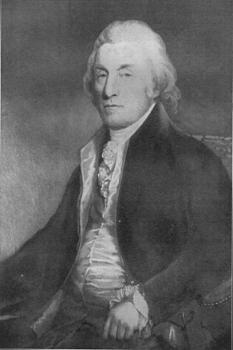
Governor, Sir John Wentworth
(1737-1820). [Time Line]


  • Introduction
  • Early Family Life:
  • Marriage to Frances
  • American Revolution
  • The Prince and The Lady
  • Surveyor General
  • The French Revolution
  • The Appointment
  • Political Struggles
  • A Georgian Structure in the Wilderness
  • The Final Years
  • Conclusions
  • Dates & Events During Wentworth's Life
  • Notes.


  • [TOC]
    Introduction:

    Though there have been attempts to link the American Wentworth clan to the powerful Wentworth family of Yorkshire in England, it is more likely that the American Wentworths were descended from a Lincolnshire branch.1 William Wentworth was one of the first English settlers who came to America. He was to make a success of himself as a merchant and shipmaster and made for himself a "handsome fortune."2 Many of William's descendants were to become prominent citizens in the then British colony of New Hampshire. William's grandson, John Wentworth was appointed lieutenant governor in 1717. The father of John Wentworth, our subject, was Mark Hunking Wentworth, whose brother, Benning Wentworth (1696-1770), was appointed Governor of New Hampshire in 1741.


    [TOC]
    Early Family Life:

    Wentworth was born at Portsmouth, New Hampshire, on August 9th, 1737. His home was "Wentworth Hall," which his father had built in competition, seemingly, with his brother the Governor. It was "one of the most costly homes in New England."3 In 1751, at the age of 14, John was sent to Harvard College.4 After obtaining a degree in 1755, he continued with his studies so to receive a masters degree in 1758. In the following five years, John followed along in his father's footsteps as a merchant at Portsmouth.

    In 1763, as much as to advance his education as it was to establish valuable family contacts, it was arranged for John to go to England, it being a standard for a young Colonial gentlemen to go to England as it was for the sons of the English aristocracy to be sent to Europe on the "grand tour." England was at this time at the height of her international power and bathing in glory at having just won the war and the prize of North America. While in England, John was to meet Charles Watson Wentworth5, the Marquis of Rockingham. Indeed, he became a frequent visitor at Wentworth-Wood house, Rockingham's country estate in Yorkshire.

    At this time, Benning Wentworth, John's uncle, was the Governor of New Hampshire. Benning was then 67 years of age and there were growing difficulties with his governorship which he had held since his appointment in 1741. Benning Wentworth "was instrumental in separating New Hampshire from Massachusetts, then granted lands west of the Connecticut in what was to become Vermont."6 Benning's style, however, was objectionable. According to Francis Parkman he was a "pompous and self-important personage."7 I am not aware of the details, but, it would appear, that while the young John Wentworth was in England suitable arrangements were made for Benning Wentworth's retirement and in his place John was to receive the appointment. A mix of factors had come into play, most of which we cannot now recount. It might have been that Benning saw the writing on the wall and was in on the plan to send his nephew to London so that a deal might be made out which would include a contribution to a "retirement package" that the family was putting together for Benning. Further, no appointment of a colonial governor would take place without the approval of those at the highest level. Rockingham, a Whig, was called in 1763 to form a government and was in place as Britain's prime minister until 1766, during which time he befriended our young hero. In any event, in 1766, John Wentworth was appointed Governor of New Hampshire and Surveyor General of the king's woods in North America. After spending the winter in England, in 1767 Wentworth left England for America. By June, having paid visits to the governors of the more southern colonies, Wentworth arrived at New Hampshire to take on his duties as its governor.


    [TOC]
    Marriage to Frances:

    In November of 1769 John married Frances Atkinson. Frances was another Wentworth, and, indeed, a cousin of John's. He had actually met Frances when she was but a young girl, at a time, I suppose, when she was just then developing the female charms that she was so successful in displaying in her adult life. As we have seen, the family had arranged for young John to go to England so to meet the elder and influential members of the family. However, just before then, John (he was called Johnny) and Frances (she, Fanny) were making plans (see contemporary portraits by John Singleton Copley). John certainly did not feel he had any choice in the matter, in respect to going off to England, and maybe Frances understood. Nonetheless she became upset with this development, just that she should be parted from John for a period of time that might extend to a number of years. Frances, probably to force the issue, engaged herself to another cousin, Theodore Atkinson, and when John sailed off to England, Frances married Theodore. In June of 1767, John, now Governor Wentworth, arrived back at New Hampshire having been away for the previous four years. Johnny was to renew acquaintances with Fanny, then Mrs. Theodore Atkinson. As to how fast and to what depth this relationship developed, I am unable to say. What we know is that Theodore Atkinson was to die of what was then called consumption on October 28th, 1769; fourteen days later his widow was to marry the governor.


    [TOC]
    American Revolution:

    This biographical sketch on John Wentworth is meant to be supplemental to my larger history of Nova Scotia and I next but set forth a few paragraphs to cover the years from when Wentworth became the Governor of New Hampshire in 1766 to that point in time 26 years later, when, in 1792, he was to become the Governor of Nova Scotia. These 26 years were very eventful ones, during which, of course, the American Revolution unfolded, an event, which, within a few years of John and Frances Wentworth settling into the governor's mansion at New Hampshire was to have the effect of turning them out of it. The first real sign of serious difficulty was to occur in 1773, when, not very far away at Boston, rebels poured tea into the harbour. This was followed up in 1774 by a series of acts (The Intolerable Acts) passed by the British parliament and aimed at bringing the North American colonies under control. By 1775, fighting erupted at Lexington and Concord. It was too, in 1775, that Frances Wentworth was delivered of her son, Charles Mary. So we might have seen Frances nursing her baby, while outdoors a rebel mob besieged the mansion. It was so bad, that, in 1775, the Wentworths fled New Hampshire to the comparative safety of Boston where the British army yet had a presence and exercised some control at the core of the city. By January of 1776, however, Frances took herself and her one year old son to England. Two months later, in March of 1776, Washington forced Howe to evacuate Boston. Wentworth, who had stayed behind while his wife and child sailed for the safety of England, was to eventually hire a sloop, and, following Howe's lead, came up to Halifax from Boston with about a dozen of his New Hampshire friends.8

    Howe's strategy, in June of 1776 -- and it would appear John Wentworth was there to assist -- in bringing the troops down from Halifax which he had brought up with him from Boston in April of that year, was to position himself at New York and from there he would cut off New England from the south, then destroy the rebellion at its heart, in Massachusetts. Fortune was first on the side of the British. Howe was able to put Washington and his forces on the run, though Washington was able to save much of his army by retreating across the Hudson to New Jersey. Generally, however, the war went badly for the British. In 1777, Burgoyne surrendered the British forces at Saratoga. In 1778, France recognized the independence of the United States. I suppose at this point Wentworth realized that it made no sense to continue on, for, he, as I am sure many did, realized that the British cause in the American colonies was lost. In April of that year (1778) Wentworth sailed for England to be with his wife and child, with it seems, a determination to wait out the war in England. In October of 1781 a great blow was to occur to the British forces which was to swing the balance of political power in England to the antiwar faction. Cornwallis surrendered his forces at Yorktown. That event did not immediately put an end to the conflict, but from then on it was obvious to all, that it was soon to be ended. Matters dragged on, mostly because the British authorities needed time to get the loyalists out of the colonies. Many flooded into Nova Scotia with the promise of assistance and free grants of land. In November of 1783, The Paris Peace Treaty having been formally signed but a month earlier, the last of the loyalist havens, New York, was evacuated.

    So, there it is. At age 29, through good fortune, John Wentworth was the governor of New Hampshire, and through bad fortune, he was, seventeen years later, to be without any position at all. To be sure, in England, Wentworth made the rounds looking for a new position, but there was nothing to be had in the colonies except in such loyal places as Nova Scotia or Canada. The few positions available were eagerly being sought after by the many loyal colonial petitioners, who were also making the rounds in London. Wentworth did manage to get himself, once again, appointed as the surveyor general, and that summer of 1783 Wentworth sailed from England for Nova Scotia in the Greyhound packet, leaving his wife and son behind. He was in the company of the newly appointed lieutenant-governor, Edward Fanning, a fellow New Yorker.9 On September 20th, Wentworth arrived at Halifax. A year later, in the spring of 1784, having left her son, Charles Mary, in the care of relatives (he was to attend Westminster School) Frances Wentworth came out to join her husband.10 She was soon to become unhappy with her new circumstances and was missing her son. Further, her husband was away for great lengths of time attending to his duties.


    [TOC]
    The Prince and The Lady:

    Prince William Henry11 was the third child and third son of George III. He figures into the story of the Wentworths, and indeed for a short period into the history of Halifax. At the tender age of 13 he was sent off to the Royal Navy to be enrolled as a midshipman. The story is, incidently, that when his shipmates realized who was in their midst and did not know how to address him, a brave one among them was to ask, and the young Prince piped up, "My father's name is Guelph and therefore if you please, you may call me William Guelph for I am nothing more than a sailor like yourselves." Fulford12 was to observe that while that was "the voice of the Prince but the words were surely the words of George III."13 Undoubtedly the young Prince was given the best of training aboard His Majesty's ships and was soon an accomplished sailor. By 1786, Prince William Henry had arrived at officer status and was spending his time in the service at Portsmouth where the twenty-year old fell in love with the pretty young daughter of the Naval Commissioner. The Prince proposed marriage to the girl and she accepted. The intentions of the couple were found out by the king at Windsor and he soon wrote the commander at Portsmouth suggesting that William be shipped out. To soothe the Prince somewhat, he was given his first command though but only 21 years of age. He was made the captain of the 28-gun frigate Pegasus and that summer was ordered to make sail for Halifax.14 After Halifax the Prince sailed for the West Indies so to put into English Harbour, Antigua to spend the winter. As it happened, Captain Horatio Nelson, then himself but 29, was in command at that station. The Prince and Nelson hit it off quite well. Indeed, the Prince was Captain Nelson's best man when, that winter, Nelson took the widow Nisbet as his wife. Fulford then writes of how things unfolded next and how the Prince was to once again come to Halifax:

    "... when Nelson was recalled in the autumn of 1787 the Prince took exception to his successor, and withdrew his ship from Antigua and sailed away to Halifax. The government then ordered him to spend the winter in Quebec as a punishment for gross disobedience. This naturally only aroused him still further, and, disregarding the dangers of the Atlantic in mid winter, he sailed for England."15
    On arriving in England, he was obliged to face the wrath of his father the king for disobeying the orders of his superiors. That problem soon passed and the Prince settled down to a naval life at Plymouth. Soon, however, the prince's romantic inclinations were to get him into, what was for him, a familiar difficulty. He once again got entangled with a young lady, and once again the king wrote suggesting the Prince be given another command and be ordered to sea. Prince William Henry was given the command of the Andromeda, and after cruising the channel for a period of time, she carried over to Halifax arriving there in August16. After a stay in Halifax she then made a run for Jamaica. In January of 1789, the Andromeda sailed for Halifax. During the first week of April, the Prince made his way to England. That was the last Prince William Henry was to see of Halifax though his younger brother, Prince Edward Augustus, was later to come to Halifax and there to play a significant role in the social and military life of Nova Scotia. But that is a tale for our larger history.

    It was necessary to tell of Prince William Henry's connection with Halifax. During his various stays which at times lasted for weeks and at other times for months, in the years of 1786-89, he was to be a fair and fêted guest of those who made up the high society of colonial Halifax. We might conclude in these years that there was only two places to which a British warship might put in for repairs and supplies, either in the West Indies in the south or Halifax to the north. Halifax was an appropriate port for his ship and a place where her young captain might amuse himself. And amuse himself he did.

    Shortly after being introduced to Prince William Henry, Frances Wentworth was to become his mistress. She was then 41 years of age, but still very much an attraction to a virile male. Apparently she paid very careful attention to her dress. Cuthbertson writes, "At one ball she appeared in a gown richly interwoven with gold and silver, and trimmed with Italian flowers and the finest silk lace; the gown's train was four yards long, and in her hair and on her wrists was a profusion of diamonds. At the many balls and assemblies she was always the most 'observed' lady present."17 Though Prince William was but in his twenties and Frances Wentworth in her forties, the biological facts of sexual attraction worked on the two and soon they were cavorting about in the Wentworth bedroom. For Prince William it was no more than a sexual romp with yet another woman. Though the couple never appeared together in public, their liaison was well known, even John Wentworth was to become aware of what went on during his many absences as the Surveyor General. He made nothing of it.18


    [TOC]
    Surveyor General:

    A job that Wentworth took most seriously was that of surveyor general. It was a critical one at the time in which he held the position, as great quantities of loyalists flooded into Nova Scotia with promises of land grants. It was Wentworth's position that no grants were to be made until he had inspected the land, to make sure that there were adequate reserves for the crown. "Wentworth's system of licencing, rather than the granting or selling of crown-owned forest lands, became the guiding principle for the administration of crown lands across Canada, and remains so to this day."19

    Ten days after arriving in Nova Scotia in 1783, Wentworth was off making his rounds. That autumn the 46-year old Wentworth was tramping the woods with his assistants, going as far as Annapolis Royal. He not only looked at standing timber, but that which had been felled. Sawmills were always to be a favourite object of his attention. The territory for which Wentworth was responsible was very wide. Nova Scotia then included the current day Canadian province of New Brunswick, and interestingly part of the current day State of Maine.

    Wentworth received a £800 annual salary for his office as surveyor general. He had requested half as much again so that he could pay the expenses of his offices, but was generally denied. Thus it was that Wentworth supplemented things by taking fees whenever he approved a grant of land. Governor Parr took issue on the basis that the people he was taking fees from (newly arrived loyalists) were promised land grants without fees. Wentworth was to receive orders directly from London to stop taking fees. This development made things that much more difficult for the Wentworth household at Halifax. During the years between his governorships, and likely throughout his life, he suffered from a lack of funds, as so many of the crown office-holders did. It was not so much that such people did not receive a fairly handsome yearly salary from the crown, it's just that they felt obliged to spend beyond their means to maintain a lifestyle which they believed was connected to the office they held.


    [TOC]
    The French Revolution:

    It is necessary, in order to understand the times, and in particular to understand the political conflict which was to unfold in Nova Scotia during the governorship of John Wentworth, to write a few words on the French Revolution.

    When revolution broke out in France in June of 1789, Wentworth was busily going about his duties as the Surveyor-General of the North American woods, with Halifax as his base. Within three years of that, as we will see, with the death of Governor Parr, Wentworth was to be named the Governor of Nova Scotia. We have seen that at an earlier time he had been the governor of New Hampshire, a job he was to lose due to a revolution. Now there was a revolution in France.20 Next, so most of the English aristocratic class thought, would be the turn of England and her remaining colonies. In September of 1789 we see where Simeon Perkins, a local merchant and not of the aristocratic class, is writing in his diary, "Terrible accounts of a Revolution in France. Several Great Men have been executed by the prevailing party at Paris, where the people have The Rule, and all the public stores. magazines, fortresses, etc in their hands."21

    Great principles, the greatest possibly upon this earth were now, during this age, to come into conflict. One side was represented by Edmund Burke, the other by Thomas Paine. If you had any ideas politic, and there were many in those days who did, more it would seem than exist these days, then you were obliged to pick a side. Edmund Burke (1729-1797), Irish born English Statesman and author, though sympathetic towards the American colonists and Irish Catholics, alike, in his work Reflections on the French Revolution (1790) attacked the principles of the French Revolution and the violence and excesses of its leaders.22 Thomas Paine (1737-1809), hardly new to the political scene,23 answered Burke with his work, Rights of Man (1791). The works of both of these men "were read and discussed with a simple eagerness natural to men plunged for the first time into political speculation."24


    [TOC]
    The Appointment:

    During the summer of 1791 both John and Frances took a ship for England; it was necessary to take a personal hand to their tangled financial affairs. As mentioned in one of my footnotes on this page, they had left their English affairs in the hands of a relative, Paul Wentworth. Paul Wentworth felt obliged to abscond, and made his escape to France. In any event, the Wentworths were to arrive in England and intending to be there for a number of months. Now, as it happened, while the Wentworths were in England, Governor Parr died at Halifax. Of course, it was no secret that Wentworth wanted the governorship. However, he was not the only person vying for the job. While Wentworth had powerful friends both at Halifax and at London, it was indeed fortunate that he happened to be England when news of Parr's death was to arrive. Though it was not automatic, Wentworth was to receive the appointment. In mid-March of 1792, the Wentworths went aboard the naval ship Hussar (Captain Rubert George) which brought the new governor to Nova Scotia. They arrived at Halifax Harbour on Sunday, May 12th, 1792, to the salute of fifteen guns.

    Thus it was that John Wentworth was to become the Governor of Nova Scotia. He had experience in such matters. He was, after all the Royal Governor of New Hampshire before the rebels caused all the problems. His experience, in some ways, was to serve him and the province very well, but there was a serious problem with John Wentworth, this 55-year old aristocrat of the old school. He had been tempered into the view that rebels, enemies of the crown, were lurking about him at all times. He of course was not alone in this view. Most all the members of the aristocratic class, both in England and in the colonies, were experiencing a dreadful unease in their privileged positions at this time. I quote John Richard Green:

    "The cautious good sense of the bulk of Englishmen, their love of order and law, their distaste for violent changes and for abstract theories, as well as their reverence for the past, were rousing throughout the country a dislike of the revolutionary changes which were hurrying on across the channel; and both the political sense and the political prejudice of the nation were being fired by the warnings of Edmund Burke. ... [Burke hated] a revolution founded on scorn of the past, and threatening with ruin the whole social fabric which the past had reared; the ordered structure of classes and ranks crumbling before a doctrine of social of social equality; a state rudely demolished and reconstituted; a church and a nobility swept away in a night."25

    [TOC]
    Political Struggles:

    During most of the years when Wentworth was the governor in Nova Scotia, there was to be a struggle between him, in his assertion of the prerogative rights of the Crown, and the House containing the elected representatives of the people. As Margaret Ells writes: "A constitutional struggle typical of colonial legislatures ensued, which culminated in an attack on the right of the house to determine contested elections. When the English crown lawyers [located in London] gave their unqualified opinion in favour of the House, the victory of the 'democratic' elements in the legislature was as complete as the humiliation of the governor and council."26 This struggle, which is to be taken up at another place, really boiled down to the struggle between two persons: John Wentworth and William Cottnam Tonge.

    "Tongue's policy was often against the interests of the governor's clique, which increasingly dominated the council. The only councilors who attended regularly were residents of Halifax, most of whom were closely associated with mercantile interests as they were with the provincial administration. Tonge identified himself with the country and raised the ire of Halifax by proposing taxation of absentee landlords, and anti-smuggling laws, and advocating high taxes, an extended programme of road building, and other expenditures which Haligonians considered opposed to their interests. The reform party was led by Tonge; in 1803 Wentworth described it as 'endeavouring to create dissensions with a view to obtain an elective Legislature council.' It has been shown that the council then consisted of Wentworth's friends and the ultra conservative Croke, a combination as antipathetic to Tonge and his radical party as darkness to light. A clash was inevitable."27
    The last election in Nova Scotia to have occurred before Wentworth's appointment was that which had brought about the Sixth Assembly which existed between 1785 through to 1793.28 On March 20th, 1793, the Seventh Assembly came into being. This assembly sat for a total of seven sessions over its six-year life (1793-99). And so, we are brought to the election of 1799, one which was to be hotly contested and which saw the birth of the party system in Nova Scotia.

    In the days under review, elections were called by the governor after dissolving the existing assembly. The time of the year for the new election was predictable; it was to be in the fall of the year, after the crops were in and before the snow started to accumulate. An election did not back then occur in one day, but rather extended over a number of days. It would appear that a poll traveled from one part of the province to another. The election of 1799 commenced at Halifax on Monday, 18 November, at 11, A.M., and closed there on Saturday, the 23rd. Back then the voters were adult men who owned real property, the so called freeholders.29 During the days leading up to them the province split itself into two camps -- those at Halifax who represented the mercantile interests and the provincial administration, and those outside of Halifax. I quote Wentworth's biographer, Brian Cuthbertson:

    "The 1799 election saw the birth of political parties in Nova Scotia; candidates in Colchester and Pictou districts (the two were then part of Halifax County) combined to challenge what they angrily called the 'Government or Court Party' ... The Court Party could generally be relied upon to support both Wentworth's wishes and those of Halifax's mercantile community. ... There had even been talk of moving the capital from Halifax to the more central rural retreat of Windsor. ... At Tonge's urging James Fulton, a prosperous farmer in Londonderry township, and Edward Mortimer, the wealthiest merchant and landowner in Pictou, determined to run and challenge the Court party's control over the county's representation. With Tonge, they formed the nucleus of what became called the Country Party ..."30
    As a result of the 1799 election, the "Country" (or "Reform") Party was to dominate the elected assembly at Halifax. Governor Wentworth, however, thought that he and his friends should just continue along with their outdated notion31 that the prerogative rights of the crown, as Wentworth represented, were not to be affected by the resolutions of the elected assembly. To Wentworth, the result of the 1799 election came about, as he inveighed, because of popular meetings "convened in the country [and] composed of uneducated tradesmen, labourers and farmers, who, from the nature of their industry, cannot possibly have any real information - who are persuaded to sign or make their mark to anything, often without knowing the contents, and almost always deceived in its objects and consequences."32 And so we see, on the surface, a great fight between the appointed governor and the elected assembly; a fight, in fact, between two powerful and moving individuals, Wentworth and Tonge.33


    [TOC]
    A Georgian Structure in the Wilderness:

    The competition between those at Halifax and those in the remote rural areas (Colchester and Pictou districts) necessitated, as far as those at Halifax were concerned to "fix" the capital at Halifax, and what better way then the building of a big government building at Halifax. Except for the governor's residence, which had been built in 1758 on the spot where today the legislative building stands, there were no government buildings in Halifax. The legislators assembled in rented premises as did the justices in the courts.34 The suggestion was made that the governor could stand better accommodations. Sir Adams Archibald, one of Wentworth's biographers, explains:

    "... the Government House in which Sir John resided, and which stood in the square now occupied by the Province Building, had got into great disrepair. It had been built of green wood. The frame stood on the original rock, no cellar had been dug, and the site had never been drained. The house was damp and wet and was very unwholesome. Sir John's health was suffering. He had at that time it is true a house of his own some six miles from Halifax, situated on the western shore of Bedford Basin, but the distance made it inconvenient, and besides the house was then in possession of Prince Edward, who had built an extensive establishment on the spot. Under any circumstances the house was private property and what was required was an official residence for the use of the Governor of the day."35
    On July 10th, 1797, commissioners were appointed to determine upon a proper site for a government building, in fact two buildings -- one as the residence of the governor, Government House, and the other in which the legislature would meet, Province House. The commissioners were to make their report to the House. There then followed rancorous debate. Tonge in his persistent attempts "to thwart the policy and plans of the governor" was against the plans as recommended. It seems that Tonge was of the view that no special accommodations need be built for the governor. As for the legislative assembly, well -- suitable accommodations, yes, but only in time when it might be better afforded. In the end, the vote was in favour with the governor's wishes but only by the narrowest of margins. There was a general preference to build the legislative building first, and then the governor's house. However, in turned out to go in just the opposite order. It was determined that the best location for Province House would be where the old governor's residence was situated. They would build Government House, then, after tearing down the old governor's residence, build Province House at its location. And in time, that is how it happened.36 All of this, it was recognized would take some considerable period of time and at considerable expense. As it turned out, much more money was spent on these two buildings then was ever imagined when the plans were first set.37

    Construction on Government House began in 1798. On the 11th of September, 1800, the cornerstone of Government House was laid by Sir John Wentworth. Wentworth is to be given the credit for the building of Government House, though as Cuthbertson observed38 the credit must be shared "with Isaac Hildreth, the architect, Michael Wallace, the commissioner who supervised its construction, and a reluctant assembly, which kept voting funds year after year, even though the cost rose to three times the original estimate."39 The country members were not keen to see money being spent on the palace at Halifax. It was necessary to pay them off, so to speak, by spending money on rural roads.40 A master painter, John Merrick, employed at the dockyard, was given the job as the interior decorator. Later it is seen41 that Merrick was to become the "architect for the building of Province House." A lot of time was to pass before the building was ready for the Wentworths to move in. They did so in 1805.42


    [TOC]
    The Final Years:

    On Thursday, April 7th, 1808, Sir George Prevost arrived at Halifax bringing with him 3,000 soldiers consisting of three regiments. He bore his commission signed by Lord Castlereagh making him the Governor of Nova Scotia in Wentworth's stead. Wentworth had no advance warning of the official notice of the appointment. A notice had been sent out to Wentworth; but the ship in which it came sailed into Halifax Harbour some 18 days after Prevost's arrival. As to the reasons for Wentworth's dismissal, well -- let us turn to his biographer, Sir Adams Archibald:

    "Whether it was that the Colonial Office had wearied of the long strife between him and Mr. Tonge, or were dissatisfied at the want of judgment shown in disputing the right of the Assembly to deal with the seats of their own members, or to vote the public monies as they judged best, whether they thought that Sir John's age, now verging on 72, was too great for the work required of him, or whether with the imminent prospect of a war with the United States, in addition to the wars with the whole continent of Europe already on the hands of the British Government, there was need of a military man at the head of affairs in Nova Scotia, whether it was one or all of these that influenced the ministry, they came to the decision that it was time for Sir John to retire."43
    Within six days of Prevost's arrival, on April 13th, the governing council of Nova Scotia met, and after having seen him take the oaths and sign the rolls, Wentworth gave the chairman's chair to Prevost. And, in such a fashion, the glory years for Wentworth came to an end.

    The Wentworths retired to their lodge on Bedford Basin. Wentworth seemed happy enough, but Francis, who now occupied herself with her dogs and her chickens, was unhappy. Frances' brother, Benning44, died that year, the very year that Wentworth was obliged to retire from office. Benning's widow and children lost little time in removing themselves from Halifax and sailed for England. Francis felt alone and she longed for England. Charles, their only child, had already moved to England in 1805.45 Wentworth came around to thinking it best for them to go London, not only to keep Frances happy, but also to be there personally so to better press the government for the payment of long outstanding accounts. Thus it was that the Wentworths moved to England in 1810, took up residence at London46. Charles moved in with them.

    In the years at London, Wentworth was to have a bad time of it. The government did not pay the kind of money that he thought was obviously due to him. He fell increasingly into debt, and the prospect of bankruptcy and debtor's prison loomed large. By 1812 the financial problems were that serious that Wentworth was unable to pay his rent or his tradesmen's bills. Just before the bailiff arrived at the doorstep, Wentworth fled. His biographer, Brian Cuthbertson writes of this sad episode in Wentworth's life:

    "His attorney, a kindly and generous man, whisked Wentworth off to Liverpool under the assumed name of John Wallace. From Liverpool he took the first ship to Halifax, and the attorney managed to save the Wentworths' plate and diamonds before the bailiffs arrived and seized everything remaining. Charles Mary and Frances went to live in a small cottage at Sunning Hill near Windsor, Berkshire. Frances was not told of her husband's flight from the creditors; her mind was going and she was seriously ill and probably heavily sedated with opium."47
    Within months, on February 14th, 1813, Lady Wentworth died. She was buried near where she then lived, in the churchyard of All Saints Church at Sunning Hill. Sir John Wentworth lived on at Halifax, in failing health, until April 8th, 1820, when he died at age 84. His remains were lodged at St. Paul's; the burial ceremony, at his request, was simple.


    [TOC]
    Conclusions:

    There is no question that Wentworth made a great impact in his time, an impact which is to be remembered today by the shape of our political institutions and the great physical monument which celebrates his life and which stands out on the landscape of Halifax, Government House. In his fights with those who challenged his executive supremacy, he actuated or animated the democratic forces bringing forth political changes, including the creation of political parties. While it was indeed his old loyalist friends that he favoured, he nonetheless brought experienced persons into important government positions. His friendships with the highest of both the aristocratic and mercantilistic circles were to enhance the effects that the war economy was to have on Nova Scotia.

    It is said48 that one of Wentworth's chief accomplishments was that he was to bring Nova Scotia's finances into much better shape than they had been in the years proceeding his coming to the governorship. Now, that Wentworth may have been better than most when it came to government finances may be so, but, I should observe, that just as Wentworth was sworn in, in 1792, Napoleon was to come to the world stage, bringing with him 23 years of war. Reading from the larger sheet of history, we see that England, and so too I should imagine for America, between 1789 and 1793, was "fat and prosperous." This in comparison to the stress and tumult in Europe. It was to be England's policy in these early years of the long Napoleonic wars not to commit troops to the continent, but instead to supply their European allies, the principal and consistent one being Austria, with money. Pitt's policy during his administration (up to 1801) "was twofold: it was a naval policy and a policy of subsidy."49 Pitt did, however, send troops to the West Indies. Great fortunes had been made by English planters in the sugar islands, and Britain was determined not to lose them to France. Many of the British troops sent for service in the West Indies first landed and were then staged at Halifax. Such activities brought prosperity to Halifax, as world war has always done for the "Warden of the North." Since the peace treaty of 1783, which had concluded the hostilities with the colonies, the docks and merchants at Halifax were less busy and things at Halifax were to remain flat until the outbreak of war in 1792.50

    So it was that John Wentworth's appointment as governor came at a critical point in the history Nova Scotia, indeed of the western world. Throughout these years, the effects of the democratic movement, as was represented in the second half of the 18th century by the American and French revolutions, flooded into Nova Scotia as it did to much of the western world. In spite of their intensity, Wentworth was to totally misread the signals which this movement had put out, especially of its unstoppability. All of it was lost on John Wentworth. Throughout the length and breadth of the momentous times in which he lived Wentworth maintained that such a movement, giving power to the people, was to be the ruination of civilization. In the end, Wentworth died in Halifax, broke and disenchanted, one of the last of the old regime.

    _______________________________

    Found this material Helpful?

    _______________________________
    [TOC]
    Dates & Events During Wentworth's Life:

    1737:
    § August 9th: John Wentworth is born.
    1743:
    § Benning Wentworth, John's uncle, becomes surveyor general as well as governor of New Hampshire.
    1745:
    § Frances Wentworth is born.
    1751:
    § At the age of 14, John attends Harvard College.
    1755:
    § John receives an undergraduate degree from Harvard.
    1758:
    § John receives a masters degree from Harvard.
    1760:
    § October 25th: George II dies: George III becomes king.
    1763:
    § The Treaty Of Paris is signed bringing the war, The Seven Years War, between herself and her rivals (principally France) to an end.
    § Wentworth, 26 years old, arrives at London.
    1766:
    § Wentworth is appointed Governor of New Hamshire: Surveyor General of the King's woods in North America.
    1767:
    § Winter: Wentworth leaves England for America.
    § June: Having paid visits to the governors of the more southern colonies, Wentworth arrives at New Hampshire.
    1769:
    § November 11th: Marries Frances Atkinson (nee Wentworth).
    1770:
    § A new authority was trenching upon the old. It went hand and hand with the growth of literacy and the ease by which political writers could get their pamphlets abroad. Though the old political guard were slow to recognize it: public opinion, right or wrong, was what was to rule: the plutocratic could rule but only through the shaping of public opinion. As Pitt observed, "Five hundred gentlemen, my Lords, are not ten millions; and if we must have a contention, let us take care to have the English nation on our side."
    § Boston "massacre": Some garrison troops in self-defence shot down a few of the Boston crowd who had attacked.
    1773:
    § December, 1773: Boston Tea Party.
    1774:
    § A series of acts (The Intolerable Acts) is passed by the British parliament aimed at bringing the North American colonies under control.
    § September 5th: The first Continental Congress takes place at Philadelphia.
    1775:
    § January 20th: The Wentworths' only child is born, Charles Mary.
    § April 19: Fighting erupts at Lexington and Concord.
    § Rebel mob besieges his mansion; Wentworth flees New Hampshire.
    1776:
    § January: Having been sheltering with her family at Boston, Frances now takes her one year old son and goes to England.
    § April: Having evacuated Boston General Howe arrives at Halifax. Wentworth, who had stayed behind while his wife and child sailed for the safety of England, had hired a sloop and came up from Boston with about a dozen of his New Hampshire friends.
    § June: Sailing down from Halifax to Long Island, Gen. Howe lands at Long Island and then marches on New York. Wentworth seems to have gone down with Howe to New York in order to lead a loyalist brigade.
    § July: Declaration of Independence.
    1777:
    § June: General Howe, who had proceeded from New York to Jersey, intending to penetrate thence to Pennsylvania, was compelled, by Washington's skilful operations, to retreat.
    § October the 16th: The surrender of Burgoyne to the Americans.
    § Washington and his troops spent the winter of 1777-78 at Valley Forge in great misery and deprivation.
    1778:
    § The French officially recognize American independence and become allied with them, and, conclude a treaty in respect to trade with the Americans.
    § April: Wentworth arrives at England.
    1780:
    § The British parliament, much before any other legislative chamber in the world, passed an Act for the Gradual Abolition of Slavery.
    § In a speech to the House of Commons, Burke makes a passing comment, "What sums we incur to nurse that ill-thriven and ill-favoured brat [Nova Scotia] -- what a cost to this wittol nation!"
    1781:
    § Yorktown: After his unsuccessful Carolina campaign the British general, Cornwallis retreated into Virginia, fortified Yorktown, and awaited reinforcements from Sir Henry Clinton in New York. Clinton delayed, however, and the French fleet blockaded Chesapeake Bay. Generals Washington and Rochambeau rushed south with French troops. Unable to escape, Cornwallis surrendered on October 17, 1781, thereby bringing victory to the rebellious Colonies. § Ratification of the Articles of Confederation places the original 13 states under the first American federal constitution.
    § Pitt, the younger, enters the House of Commons; the Tory Government of Lord North is tottering under the disasters in America.
    1782:
    § April 12th: Lord Howe's destruction of De Grasse's fleet at the Battle of the Saints, a battle which saved the British West Indies and restored Britain's absolute command of the seas.
    § October: John Parr becomes Governor of Nova Scotia.
    § Peace negotiations between England and the United States were signed in November and with France and Spain in January 1783.
    1783:
    § "From September, 1782, to December, 1783, the Loyalists came from New York in such numbers that the government was busy day and night making provision for their settlement."
    § Wentworth is, once again, appointed the Surveyor General of the King's woods.
    § Summer: Wentworth sails from England for Nova Scotia leaving his wife and son behind.
    § September 3rd: The Paris Peace Treaty by which the hostilities between Great Britain and her colonies were brought to an end and which brought into being the independent nation of the United States of America.
    § September 20th: Wentworth arrives at Halifax.
    § November: New York is evacuated.
    1784:
    § March 25th: Parliament is dissolved.
    § Pitt defeats Fox and North at the polls.
    § Spring: Having left her son, Charles Mary, in the care of relatives, Frances Wentworth came out to join her husband at Halifax.
    § The population of Nova Scotia (which at this time included part of present day New Brunswick): "Old British inhabitants," 14,000; "Old French Acadians," 400; and "Disbanded troops and loyalists, called new inhabitants" 28,347: For a total of 42,747.
    1785:
    § The Big Bang of The Industrial Revolution occurs in England when, for first time, steam engines are used to power spinning machinery.
    1786:
    § Summer: Prince William Henry in the Pegasus, pays his first visit to Halifax.
    1787:
    § In Philadelphia the members of the Federal Convention of 1787 were sitting down to put the finishing touches to the American constitution.
    § Wentworth travels throughout a wide area to carry out his duties as the Surveyor General.
    § Autumn: Prince William Henry in the Pegasus, again pays visits to Halifax.
    1788:
    § August 25th: "His Royal Highness, Prince William Henry, is arrived there [Halifax in the Andromeda]." (Perkins Diary.) There was, it would appear, three Royal Navy ships sailing together: the 32-gun Andromeda, the Thisbe and the Brisk; the three, we note, called into the newly established Loyalist town of Shelburne.
    1789:
    § Washington becomes the first president (1789-97) and takes office on April 30, 1789.
    § At Paris, a political club or society meets in the old convent of the Jacobins (order of monks) to maintain and propagate the principles of extreme democracy and absolute equality; they became known as the Jacobins.
    § June: The French Revolution breaks out.
    1790:
    § The very first nation wide census is carried out in the U.S. The count was 3,929,827.
    § Burke's Reflections on the French Revolution.
    1791:
    § Paine answers Burke with his work, The Rights of Man.
    § French Constitution: The European liberalism of the 19th century, was first formally proclaimed in the French constitution of 1791; a theory of liberty, the "Golden Rule of Liberty": "Men are born free and equal in rights, ... Liberty, ... consists in being permitted to do anything which does not injure other people. ... The exercise of the natural rights of each man has not limits except those which guarantee to the other members of society the enjoyment of the same rights."(Articles 1 & 3 of 1791 French Constitution.)
    § Summer: Wentworth with Frances arrive in England in an attempt to unravel their financial affairs.
    § November 25th: Governor Parr dies; that winter it is announced that Wentworth was to become Nova Scotia's new governor.
    1792:
    § March: The Wentworths sail from England.
    § May 12th; The Wentworths arrive at Halifax.
    § May 14th: Wentworth sworn in as Governor of Nova Scotia.
    § August 10th: A Parisian mob storm the Tuileries and take the royal family as prisoners. The "September massacres" follow.
    § The Napoleonic wars (1792-1815).
    § The British capture Saint-Pierre and Miquelon.
    1793:
    § January 21st: Louis XVI is beheaded; George III sent the French ambassador packing; Diplomatic relations were severed; France invaded England's ally, Holland; and, on February 1st, France declared war on England.
    § The courts deport transport dessenters to Botany Bay, part of the larger government effort to prosecute editors, nonconformists and radicals; most all of whom are now arguing for Parliamentary reform.
    § On the 22nd of July, 1793, Mackenzie writes his famous inscription on a rock bluff in Dean's Channel: "Alexander Mackenzie, from Canada, by land, the twenty-second of July, one thousand seven hundred and ninety-three."
    1794:
    § Howe's victory of "The First of June" that arose as a result of the meeting of the English and French fleets off of Brest was to show to the world that England continued to hold on to her superiority at sea.
    § The American Congress establishes a navy.
    1795:
    § Wentworth is made the Baronet of Nova Scotia.
    § November: Benning Wentworth, Frances' brother, is sworn in as a councillor, "on a royal mandamus."
    1796:
    § Washington's Farewell Address. His three main points: "the baneful effects of the Spirit of Party"; the wisdom of keeping clear of foreign entanglements; and, for political stability, the necessity of religion and morality.
    § The French conquer Italy, and Austria deserts Britain in her struggle against France.
    § Jenner discovers vaccination.
    § A Bavarian by the name of Alois Senefelder discovering that water and grease did not have an affinity for one another and from that determined to employ a different printing process by which art work could be relatively and inexpensively reproduced in quantity. Thus, a printing process known as lithography was to come into being.
    § May 10: Duke of Kent, having been appointed Commander of the garrison at Halifax, arrives from St. Kitts.
    1797:
    § In January, with Bonaparte having successfully invaded Italy and Spain coming in on the side of France and Austria retiring from the war, France was left without an enemy on the continent, and England without an ally. England, fearing an invasion, withdrew her ships from the Mediterranean, which was thus to become a "French Lake" from January 1797 to May 1798.
    § John Adams (1735-1826), one of Wentworth's class mates, becomes the second President of the United States (1797-1801).
    § Naval mutinies between April and June at Spithead and the Nore.
    § Frances becomes quite ill and it was feared she might die; she recovers but then was to spend a number of months in bed. Hearing that her son Charles Mary, who was then in England, was not well, Frances, in the spring of 1798, sails for England.
    1798:
    § Malthus comes out with his An Essay on the Principle of Population.
    § Wordsworth and Coleridge jointly publish The Lyrical Ballads.
    § Nelson re-enters the Mediterranean in May, 1798; and, in August Nelson destroys the French fleet at The Battle of the Nile.
    1799:
    § Frances and Charles Mary returned to Halifax, both in good health.
    § In Nova Scotia: The assembly meets on Friday, 7 June, 1799 (7th general assembly, 7th and last session). Governor Wentworth in his speech recommends quarantine laws to guard against "yellow fever"; he recommends the completion of the roads to Annapolis and Pictou.
    1800:
    § In January, an influential group of men come together to form the Royal Institution of Great Britain. The RI was to provide bench space to some of the most famous names in British science, such as, Sir Humphry Davy and Michael Faraday. The RI was to give regular public addresses, and, Albemarle Street was to become so fashionably popular that it was the world's first one-way thoroughfare.
    § For a few months during the winter of 1800-01 there was formed a league against England; the league consisted of Prussia, Sweden, Denmark and Russia. This "was caused partly by the whim of the Czar Paul [and] partly by two feelings then prevalent in the Courts of Europe, fear of France and jealousy of English naval power." With Nelson's capture of the Danish fleet at Copenhagen in April, 1801, this league against England shortly came to an end.
    § The British army, for the most part gave up the cocked hats and adopted the cylindrical shako.
    § February 20th: The 8th General Assembly sits.
    § June 23rd: "For sale, for term of years, as may be agreed on, a likely stout Negro girl, aged 18 years, good natured, fond of children, and accustomed to both town and country work."
    § "The Duke of Kent imported four horses of value, to improve the breed in the province."
    § July 8th: "Mr. Bulkeley, master of the Rolls, and Register in Chancery, resigns, and Benning Wentworth, Frances' brother, is appointed in his stead."
    § August 4th: Duke of Kent leaves Halifax for England for the last time, arriving at Portsmouth on August 31st.
    § August: The Maroons, having arrived in Halifax during 1796, were placed on the ship Asia and sent off to a new British colony in Africa, Sierra Leone.
    § September 11th: The corner stone for his new house, Government House, is laid by Wentworth.
    1801:
    § John Adams (1735-1826), one of Wentworth's class mates, leaves and Thomas Jefferson (1743-1826) is sworn in as President of the United States; Jefferson was to serve from 1801 to 1809.
    § Great Britain and Ireland come together under one legislative body. In June, 100 Irish members became part of the house of commons; and, 28 temporal and four spiritual peers took their seats in the house of lords. Thereafter commerce between the two countries was freed from all restrictions.
    § "On the 4 February, the stables, coach houses and offices at Sir John Wentworth's villa, the 'Lodge,' were burned, and on the 8th a fire occurred in front of Government House, by which many houses and stores on Hollis Street were destroyed."
    § The citizens of Halifax suffer from the smallpox.
    § In 1801, Wentworth complains that there is "not one ship of war left ... to protect the coast and the trade."
    1802:
    § The Treaty of Amiens is signed and the war between France and England is ended leaving France supreme in Western Europe, and England supreme on the oceans of the world. With this peace (1802-03), the Peace of Amiens, there came a swarm of American fishermen to the shores of Nova Scotia; many of these fishermen had previously lived in Nova Scotia; it was reported (Fergusson) that 750 vessels of the United States passed through the Strait of Canso, within a year.
    § April 9th: a committee of the whole house condemns the commission set up to oversee the building of Government House. The committee had kept no minutes and it obtained no estimates; generally it exercised no control over the £10,000 which the house had allotted. The lack of control was so bad that, while only the first story had been completed, the money was practically all gone.
    § April 14th: The displeasure of the house having been communicated to him, the Lieutenant Governor sent a message back. Sir John "declined to alter the commissioners for building government house, on the ground they were fully competent to their duty -- had not offered to resign, and had hitherto conducted themselves in that service to his satisfaction."
    § A fleet of H. M. ships arrive Halifax on 13 September and depart 11 October during which time they are victualed. The fleet had come in from sea after having travelled from Jamaica.
    1803:
    § War again: the Peace of Amiens comes to an end. A circular letter, dated 16 May, 1803, from Downing Street: "Unfavorable termination of the discussion lately depending between his majesty and the French government ... his majesty's ambassador left Paris on the 13th." Letters of marque and commissions to privateers are to be issued, and French ships to be captured, &c. The kings share of all French ships and property will be given to privateers. Homeward bound ships should wait for convoys."
    § Green: "Amid all the triumphs of the revolutionary war, the growth of the British empire had been steady and ceaseless. She was more than ever mistress of the sea. ... She was turning her command of the seas to a practical account. Not only was she monopolizing the carrying trade of the European nations, but the sudden uprush of her industries was making her the workshop as well as the market of the world."
    § On the 1st of June the house meets (8th general assembly, 4th session); one of the things voted upon is more money (£3000) so to continue the building of Government House.
    1804:
    § "On the 11th of April 1804, a treaty was concluded at St. Petersburg. Five hundred thousand men were to be arrayed against France. Great Britain was to contribute ships and men and money. on the 9th of August, Austria signified her adherence. This was the Third Coalition."
    § May 18th, 1804: Pitt is recalled and takes his seat as the prime minister, once again. The same day that his arch rival, Napoleon is proclaimed Emperor of the French.
    § Nova Scotia continued to export timber and gypsum; it seems, not surprising given all the granite she possesses, she was also exporting grindstones to the states. Fish and oil was sent abroad. Agricultural "skill and attention," however, was lacking.
    § Wentworth expresses fear over the build up, in the United States, of French ships and French troops, and the necessity, in the circumstances, of securing the coast from picaroons.
    § War between Britain and Bonaparte-dominated Spain breaks out on December 12th, 1804.
    1805:
    § Wentworth writes to Tonge from the "Lodge, near Halifax, 9 July, 1805" and sends his wishes for "the recovery of his health." (Murdoch.)
    § A French prisoner, Pierre Paulin, was tried, convicted and sentence to death; he had killed a fellow prisoner. While Wentworth was sympathetic and would have spared the man's life, he was convinced otherwise by the council, and so, on 24 October the sentence of death was carried out. (Murdoch.)
    § William Cottnam Tonge is picked by the house as speaker, pro tempore. Tonge took this to be a great privilege: "Gentlemen, I feel this to be the most honourable day of my life. ... To succeed as I have done, without intrigue, without personal solicitation, or influence of party ..." (As quoted by Murdoch.)
    § Charles, Wentworth's son moves to England.
    § October 21st, Nelson's victory at Trafalgar, by it both the French and Spanish navies were annihilated, and, the the danger of any invasion of England rolled away like a dream.
    § Halifax hears of Nelson's victory. The town is illuminated.
    § In December of 1805 the Battle of Austerlitz took place (Austerlitz is a place located in modern day Czechoslovakia). Napoleon decisively defeated the armies of Russia and Austria, each with its emperor at its head.
    § "28 Dec'r. The committee of supply voted £12,000 for civil list, £6,000 for roads and bridges, £2,000 agriculture, £3,000 fisheries, £2,500 for the new Government House, £500 bounties to seamen to enlist in H. M. service, conditioned that no inhabitant or fisherman be impressed." (Murdoch.)
    1806:
    § On January 23rd Pitt dies.
    § Grenville, the foreign secretary since 1791, forms the government of "All the Talents" which was dissolved in 1807.
    § February 3rd: Wentworth writes to Castlereagh about Tonge: "... exerted every possible means to protract the session -- to infuse and disseminate groundless jealousies and discontent into the minds of the people ... [further he attempted] to prevent any grant of revenue to his majesty, which ... were delayed until nearly one-third of the net duties for the year were lost by importations during the time the revenue bills ceased."
    § February 21st: Wentworth suspends Tonge from the office he held as the "naval officer," appointing John Beckwith in his place.
    § In September Fox dies in office.
    § November 18th: new assembly meets (9th, 1st)
    § December3rd: The 9th assembly met for the 2nd time. Governor Wentworth was not there for the opening as Lady Wentworth was "dangerously ill," Chief Justice Blowers read the speech.
    § The American, Robert Fulton (1765-1815), in the Clermont, proves the practicality of steam power for river craft.
    § In 1806 England abolishes the slave-trade (in 1833 slavery itself).
    1807:
    § The American continent is now being tied together and mapped all the way to the Pacific. David Thompson (1770-1857), surveyor and geographer, was making sense out of the observations and explorations of the past and the present.
    1808:
    § The lawful import of slaves ends in the United States.
    § February 18th: Benning Wentworth dies.
    § April 7th: Sir George Prevost arrives at Halifax bringing with him his commission signed by Castlereagh making him the Lieutenant Governor of Nova Scotia replacing Wentworth.
    § Prevost writes of the Government House: "... an edifice out of all proportion to the situation ..." As for the defences at Halifax, "Ruin and desolation."
    § In support of a Spanish rising, in July, Arthur Wellesley (later to become known as the Duke of Wellington) leads the first small British force of 9,000 men into the peninsula of Spain; a gate into the hostile fortress of Napoleonic Europe.
    § July 7th: Lord Castlereagh writes Prevost "to hold the troops he had accompanied to North America in readiness for distance service." Prevost prepares to capture Martinique. (Murdoch.)
    § December 6th: Prevost sails, at 9 A.M., with his troops. He arrives Barbadoes 23 days later, 29th Dec.
    § Dr. Croke in sworn in to temporarily replace Prevost.
    1809:
    § Halifax: The winter has been very severe and on February 10th a large subscription is made for the "relief of the poor."
    § James Madison (1751-1836) is sworn in as President (4th) of the United States. He served from 1809 to 1817.
    § April 15, Prevost with his troops arrives back at Halifax after having captured Martinique.
    § Halifax: Horse racing is carried on by the officers of the garrison; the Rockingham Club holds diners.
    § Halifax: The Halifax Fire Insurance Company, the first and oldest Canadian fire insurance company, was started.
    § September 18th: Six mutinous seamen of the Columbine are "hung in gibbets on Mauger's beach." (Murdoch.)
    § Perceval becomes the English Prime Minister and Liverpool Secretary for War and the Colonies.
    1810:
    § George III is ill; his son, the Duke of Wales (1762-1830) takes over as the Prince Regent; in 1820, on his father's death, he becomes George IV.
    § The Wentworths move to England taking up residence at London.
    1811:
    § Austen's work, Sense and Sensibility.
    § Advertisement in paper, 16 January, 1811: "W. Madden begs to acquaint the ladies and Gentlemen of Halifax, that he has fitted up Three Carriages etc. etc. .. these Carriages to be found on the stand fronting the Custom House ..."
    § The Bill allowing £15,000 to be spent on roads and bridges is passed by the house, but returned by the council. Same old problem, the rural areas, well represented in the house, want roads; and the council, the members of which represent the interests of those in Halifax, do not.
    § August: The cornerstone of Province House laid by Sir George Prevost.
    § August 23rd: Prevost sails for Quebec to take up his position as the Governor of Canada. Dr. Croke, for the second time, is sworn in as a temporary administrator of Nova Scotia.
    § October 16: General, Sir John Coape Sherbrooke, arrives with his lady and family at Halifax, after 37 days passage from Portsmouth.
    1812:
    § February 6th: The tenth assembly of the province meets in its first session. The House held 39 members in the same distribution as we saw in 1806.
    § May, Prime Minister Perceval, assassinated.
    § Wentworth flees his creditors. Leaving behind his wife and child which he was not to see again, he takes refuge at Halifax.
    § Paper money is issued by the government in Nova Scotia.
    § On 18 June: President Madison and the American Congress declare war on Britain. There then follows: The War of 1812.
    § Byron Donkin builds (tin plate having been invented in 1810) the first canning factory in England, his principal orders coming from the Royal Navy for canned soups and meats used in the war against America.
    § Convicts, employed chiefly as quarrymen and stonecutters, built the magnificent naval base in Bermuda.
    § July 21st: The council gives advise to issue letters of marque.
    § Liverpool becomes the English Prime Minister.
    1813:
    § February 14th: Lady Wentworth (1745-1813), in her 68th year of age, dies in England.
    § April 27th, 1813, American forces raid York [Toronto] looting and burning buildings, including the governor's house and the provincial legislative building.
    § Sunday, June 6th, the victorious H.M.S. Shannon arrives at Halifax with her prize, the American frigate Chesapeake. The Shannon had taken her off Boston on June 1st in likely the most decisive and quickest naval battle ever.
    § During forty days in May and June, the British troops drive the French armies over the Pyrenees and out of Spain; Napoleon's back is broken by the military and diplomatic actions of Wellington and Castlereagh.
    § 10 September: The American squadron, under Perry, captures all of the British ships on Lake Erie.
    § Napoleon retreats from Moscow and struggles to retain hold of central Europe.
    § Commerce in the colony continues, it seems to be based on the export of boards, planks, staves, dry fish, smoked herrings and fish oil.
    § The organization of the Boston Manufacturing Company to produce cotton cloth in Waltham, Massachusetts, begins the transformation of the United States from a commercial to an industrial nation.
    § In England, thirteen "Luddites" are hung at the York Assizes.
    1814:
    § April: Paris is captured and Bonaparte abdicates.
    § Land "on the highroad leading from Halifax, N. S., towards the Governor's north farm" is given over to H. M. Dockyard. The land is conveyed so a residence might be built, at his Majesty's expense, for the Hon. Alexander Forrester Cochrane, a Vice-Admiral and the commander-in-chief of the North American and West Indian station, 1813.
    § The legislature votes £150 "for a survey of the Shubenacadie river and the lakes from the head of the tide to Bedford basin."
    § August: In direct reprisal for the burning of York in the previous year, the British sack Washington.
    § August 26th, 1814, an expedition under Sir John Coape Sherbrooke sails from Halifax, with a view to doing mischief to the Americans. "The fleet consisted of the Bulwark, Dragon and Spencer, of 74 guns, two frigates, two brigs, a schooner and ten transports ... On the first of September they arrived at Castine, on the Penobscot river, which was taken possession of without resistance; the enemy having blown up the fort, and effected their escape."
    § December 24th: Treaty of Ghent signed.
    1815:
    § March 1st: Napoleon returns from Elba and the "Hundred Days" begin.
    § April 3rd, 1815: the house is prorogued. Acts of interest: "bridewell or house of correction" was established at Halifax; the manner by which one owns real estate was simplified, in that "entails" were barred and where one might take "good title" by a registered deed; and a company was incorporated and given to it were exclusive rights to run a ferry between Halifax and Dartmouth.
    § June 18th, 1815, the Battle of Waterloo.
    § Unemployed ex-servicemen walk the streets.
    1816:
    § In England, gold was declared to be the sole standard and full legal tender, and a new coin, known as the sovereign was put into circulation.
    § Men were put to death for serious crimes; and for certain of the less serious crimes the court would order that one of the convict's ears be cut off, -- one eared men were to be avoided.
    § June 27th: Sherbrooke "embarks for Canada" to take up his duties as the governor.
    § "The travellers of this time were notified in February, by Isaiah Smith, that they could go from Halifax to Windsor, or from Windsor to Halifax, for six dollars. Six inside passengers could find room in his stage-coach, which made two trips every week."
    § Construction begins on Erie Canal, designed to connect the Great Lakes and the Hudson River (and thus the Atlantic Ocean).
    § Robert Owen publishes A New View of Society or Essays on the Formation of the Human Character Preparatory to the Development of a Plan for Gradually Ameliorating the Condition of Mankind.
    § October 24th: Earl of Dalhousie and his family arrive at Halifax, he was to be sworn in as Lieutenant Governor.
    1817:
    § Civil wars (Simón Bolívar and the Latin American revolution) sweep over the Spanish New World in waves from 1812 to the early 1820s; driven by both the political theories of Rousseau and the disruptions of civil order in Spain on account of Bonaparte and the resulting peninsular wars.
    § Ricardo's work, Principles of Political Economy & Taxation is published.
    § The war against the Radical Press in England heats up; Habeas Corpus Act is suspended for a whole year.
    § The population of the Nova Scotia is 94,000 and "the staples of export were fish, lumber, gypsum, and grindstones."
    1818:
    § Unrest in England, with the Northern and Midland radicals causing sporadic violence and attacks on mills.
    § The American flag now has 20 stars.
    § The population at Halifax amounted to 11,156 souls of which 745 were black. The population of the entire province stood at about 77,000.
    § One can get a sense of how a number of Nova Scotians made their living back in 1818. As a measure of the commercial activities of the provinces one need only see the manifests of the sailing vessels that cleared Lunenburg between 12th January and the 25th of March, 1818. 150,000 feet of pine lumber, 24,850 oak and ash hogshead staves, 8500 hogshead hoops, 1300 gallons of fish oil, 453 barrels of pickled fish, ... 5320 quintals dry cod and scale fish, 220 bushels of potatoes, 15 do turnips, 53 shooks, 20 spars, 11,000 shingles. Flour was still being imported into the province. During 1819 over 50,00 barrels were imported into the province, whereas 37,500 bushels of potatoes were exported.
    § "Theatrical performances continue to be popular." At Halifax, there are now two rival theatrical companies placing their placards around town.
    § In this year, 1818, the house passes an acts including an act "to prohibit corporate bodies issuing paper money, -- [and] an act for £15,000 in province notes, of £5, £2, and £1." (Murdoch.)
    1819:
    § May 24th: Queen Victoria is born.
    § August 16th: "Peterloo: an orderly and unarmed crowed of about 60,000 men, women and children" assemble in support of universal suffrage, in St. Peter's Fields, Manchester. They were there to hear the speaker, Radical Hunt. The magistrates, in a move to arrest the speaker, order the cavalry in: "eleven persons, including two women, were killed or died of their injuries; over a hundred were wounded by sabres and several hundred more injured by horse-hoofs or crushed in the stampede." (G. M. Trevelyan.)
    § August 9th, Robert Field, a Halifax artist (who, among others, did Sir John Wentworth) died in Jamaica.
    § Keats, Hyperion; Shelley, Promethus Unbound.
    § The United States buys Florida from Spain.
    1820:
    § The Missouri Compromise: In 1820 the U.S. Congress passed an act which admitted the State of Maine as slave free state and Missouri as a slave state, thus keeping the number of the slave and anti-slave states equal. By The Missouri Compromise, any state above 36 degrees 30 minutes was to be free; below that could be slave territory.
    § January 29, 1820: George III dies, George IV (1762-1830) takes the throne, due to his father's derangement he had been the Prince Regent since 1810.
    § April 8th: Sir John Wentworth, aged 84, dies at Halifax.
    _______________________________
    [TOC]
    NOTES:

    [1] Cuthbertson, The Loyalist Governor, p.74.

    [2] Belknap's History of New Hampshire; an abstract of it in respect to our subject is set out by Murdoch in his History of Nova Scotia as an addenda, vol.2, p. 622.

    [3] Cuthbertson, op. cit., p.6.

    [4] One of Wentworth's class mates, incidently, was John Adams (1735-1826) who was to become the second President of the United States (1797-1801). Of twenty five members of the class of 1755, Wentworth was placed fifth.

    [5] In quoting Hoffman, Russell Kirk, Edmund Burke's biographer, [Edmund Burke: A Genius Reconsidered (Arlington House, 1967) at p. 79] wrote of Rockingham. "The Marquis was a man of strong character and large experience in the world, he knew the courts and kings of Europe, had dined with Roman cardinals, charmed Italian princesses; he spoke three languages, had managed astutely a large fortune, commanded militiamen in war, ruled the politics of Yorkshire, and had been schooled for high public responsibilities by the chiefs of the Whig party. He was their head because they wished it so ..."

    [6] Paul Johnson, A History of the American People, p. 86.

    [7] A Half Century of Conflict (vol. 2), p. 70. An example of his pomposity is that Benning had built for himself, a fifty-two room mansion in Portsmouth as his, the governor's residence. (Cuthbertson, op. cit., p.5.)

    [8] Indeed it seems that Wentworth came up with the Howe fleet, for, on the 1st of April, 1776, Perkins writes: "Wind about N. Gamaliel Stuart arrives from Halifax. Brings news that about 50 sail of vessels are arrived there from Boston, with some troops and families from Boston, that were routed from thence by the Provincial army, etc. Several vessels are in the mouth of our harbour. At evening we learn that they are part of the fleet from Boston. A schooner anchors near Moose Harbour, having his Excellency, Gov. Wentworth, on board, who reports that the King's troops have evacuated the town of Boston, and that the Council, Commissioners, etc., and a number of families are come to Halifax, in all about 200 sail. The Centurion man of war is off the harbour." (Perkins' Diary.) In the DCB, we see where Wentworth "fled to Boston, Mass., next to Halifax, and then to New York City where he organized a company of loyalist volunteers in 1776." What we know, is that Howe, that summer, departed Halifax with the British forces under his command, to land at Long Island and then to march on New York city; it would appear that Wentworth was with him.

    [9] It is to be remembered that John Parr was named the full Governor of Nova Scotia in 1782; and, I might say at this point was to continue on as the governor until his death in 1791, at which time John Wentworth, finally, was named as the governor of Nova Scotia.

    [10] On leaving England for Nova Scotia to take up his duties as the surveyor general John Wentworth was to leave his English affairs in the hands of a relative of his, Paul Wentworth. John Wentworth, as did many Americans loyal to the British cause, had claims against the government for his losses which were to be pressed in England. Paul Wentworth was left with a general power of attorney. Unfortunately Paul Wentworth made a complete mess of things. After going bankrupt, Paul Wentworth fled England leaving John Wentworth with serious financial difficulties which continued thereafter throughout his life, and, indeed, were most acute in later years after he was to leave office.

    [11] Prince William Henry (1765-1837), Duke of Clarence and who in with the death of his brother in 1820 was to become the king of England, William IV, "The Sailor King."

    [12] Royal Dukes, The Father and Uncles of Queen Victoria by Roger Fulford (London: Duckworth, 1933).

    [13] Ibid. p.84.

    [14] Ibid. p.90.

    [15] Ibid. p.92.

    [16] 25 Aug: "His Royal Highness, Prince William Henry, is arrived there [Halifax]." (Perkins Diary)

    [17] Op. cit., p.41.

    [18] It would seem that John and Frances had an "open marriage." I think we might conclude that Frances was bedded my more than just the Prince: there were a number of available young officers who could be discrete and would be more than pleased to please Lady Frances. Wentworth, too, had his ladies. During his governorship of Nova Scotia, he was to have a number of black servants (Maroons), one of whom he took as a mistress. It is said (Cuthbertson, pp.83,161) that she was to have a child by him who was to live out his years at the black community to the east of Halifax, Preston. His name was George Wentworth Colley. Colley died in 1893. Also we might add, in 1799, during a time that Frances was absent in England, Wentworth took up with another; her name was Bridget Lowe. Cuthbertson writes of this (p.85): "Lowe was her married name for, as was the custom in the eighteenth century, Wentworth, as part of his contract with her, had arranged for her to marry a Fergus Lowe, who after the marriage promptly disappeared. One son at least was born and baptized on July 2nd, 1799 as Edward Lowe, and was brought up in the house of Wentworth's friend and fellow Loyalist, Theophilus Chamberlain."

    [19] Cuthbertson, op. cit., p. 33.

    [20] No matter that the American Revolution and the French Revolution had quite different causes, quite different courses, and quite different results -- John Wentworth and those in the aristocratic class to which he belonged feared the populist movement which drove such revolutions. Such movements, rude mobs being led by demagogs, a number of British aristocrats thought, if not nipped in the bud, would bring in their wake nothing but ruin, not only to the class to which they belonged, but to the country as a whole (in respect to the course of the French revolution, in the judgment of history, that was most certainly so).

    [21] Though the envy of and model for foreign courts, the French court was, as the 18th century closed, bankrupt. The States-General (like our legislature) was called into session in May of 1789. It had not assembled since 1610. In the intervening years France was ruled by an absolute monarch. Constituting itself as a majority against the ruling classes, the States-General defiantly proclaimed itself the National Assembly and took power onto itself. The French Revolution ensued. On July 14th, hoping to find arms, a Parisian mob stormed Bastille Castle which was then functioning as a royal prison. The mob killed its governor, the Marquis de Launey, and released the prisoners.

    [22] "May the last of the Kings be strangled with the guts of the last priest," an old Jacobin toast.

    [23] Thomas Paine, the son of a Quaker corset maker, went to America at age of 37 and not only became one of the guiding lights of the American Revolution, but also fought in it. His pamphlet, Common Sense (1776) "worked a powerful change in the minds of many men," and won many of the American colonists over to the cause of independence.

    [24] George Macaulay Trevelyan, British History in the Nineteenth Century (1782-1901); (London: Longmans, Green; 1924) p. 65.

    [25] Vol. X, pp. 142,45. Governor Wentworth expressed his "utter abhorrence of French democratic tyranny." (In a letter, dated 23rd July, 1793, to Mr. Dundas, the British secretary of state, as cited and quoted by Murdoch, Vol. 3, p.114.)

    [26] "Governor Wentworth's Patronage;" NSHS, Vol #25.

    [27] Ibid.

    [28] That the Sixth Assembly lasted ten years would be no surprise to the people of the time. A particular elected assembly lasted for as long as the governor thought that it should last. The Fifth Assembly, Nova Scotia's "Long Parliament," lasted fifteen years, 1770-85. In 1793 a bill was passed, the Septennial bill, which called for an election to be held before seven years ran out on any sitting assembly.

    [29] Murdoch, vol.3, pp.183,322-3.

    [30] The Loyalist Governor, pp.115-6.

    [31] The supremacy of the elected assembly had been firmly determined better than a hundred years before Governor Wentworth determined to do battle with the elected assembly of Nova Scotia. I but refer the reader to my note of the "The Glorious Revolution"

    [32] See Murdoch, vol. 3, p. 261-2. Murdoch was to observe (p.273) that Wentworth was bound to the "error of all the old, colonial constitutions" where power was coveted in the form of the appointed Council. These men were of but one class who collectively were of the view, that they alone were privy to the counsels of the Almighty and that they, withdrawn from public sight, knowledge, or use, would make the important administrative decisions for the province. They, those who made up the Council, also held the important government and judicial offices, the tenure of which, as a practical matter, was for life; and when a vacancy in their number should occur by death or removal, then they had the power to see to the nomination of the person to fill that vacancy, more often then not a son of the person who had previously occupied the office.

    [33] As quoted by Murdoch at p. 191. Wentworth was, in his letters to London, to continually complain about Tonge, viz. that he "had taken infinite pains to exclude several old and respectable members, to produce contested elections ... to disturb the peace and harmony of the county by the tricks, falsehoods and follies used in popular elections." The problems with the legislature were due to the "machinations of one member, actively disseminating discord and hatred, both in and out of the house, more especially against those who are in the king's service, and longest established. Strange to tell, this man and his family exist upon the bounty of government, and thus ungratefully seeks to subvert its harmony, in which consists its credit and prosperity, but I think he will be disappointed." (As quoted by Murdoch at p. 191; and see, Archibald, "The Life of Sir John Wentworth, ..." NSHS, #20 (1921) p.80.) In this fight with Tonge, history's conclusion is, that Wentworth took the worst part of it; and it reflected poorly on his character. It would not seem that Tonge knew that Wentworth was writing to London about him, and as Murdoch says, "There is much to regret in the tone of this and other official letters of a similar kind. It is quite evident that whatever may have been Mr. Tonge's ambition, there was no design on his part to disturb the loyalty of the province." (Murdoch, vol. 3, p. 249.) Sir Adams Archibald observed: "We can draw but one conclusion on that matter [the almost constant conflict he had with the elected legislature], and that is not a conclusion in favor of Sir John. When we find the Governor thus making statements, proved by the clearest evidence to be untrue, it cannot but sap our confidence in any assertion he makes supplied by no other authority than his own statement." ["The Life of Sir John Wentworth," NSHS, #20 (1921) p.100.]

    [34] Cuthbertson writes, that the legislature met, just as the courts did, in an "upstairs room in the Cochran brothers' building in Market Square, facing on Bedford Row." (The Loyalist Governor pp.108-9.

    [35] "The Life of Sir John Wentworth," NSHS, #20 (1921) p.78.

    [36] The cornerstone was laid for Government House by Wentworth in 1800 and for the Province House by Prevost in 1811. Government House and Province House, I hasten to add, stand today and continue to be used as originally intended; they are the pride of the province and of Halifax in particular.

    [37] For greater detail of all of this, see: Murdoch, vol. 3, p. 196, p. 220-1, p.259; "Government House at Halifax" NSHS, #3 (1882-83); and "The Province Building" NSHS, #4 (1884).

    [38] The Loyalist Governor at pp.108-9.

    [39] When, in 1808 Sir George Prevost was sent to replace Wentworth as the governor of Nova Scotia, he was to remark that the house that Wentworth had built for himself, Government House, was "an edifice out of all proportion to the situation."

    [40] "An arrangement was eventually reached whereby Wentworth got his new Government House and the country members more money for roads." (The Loyalist Governor p.109.)

    [41] The Loyalist Governor p.110.

    [42] While the mansion was being built and readied, the Wentworths, after Prince Edward and Julie returned to England, in August of 1800, took up residence at Prince's Lodge, a place which they had but just lent to the Prince when he first arrived in Halifax in 1796. Between the years, 1796-1800, during the summer months, the Wentworths were to stay at the home they had built for themselves east of Halifax, in the Preston area.

    [43] "The Life of Sir John Wentworth," NSHS, #20 (1921) pp.100-1.

    [44] Benning Wentworth (1755-1808): Cuthbertson writes (at p.119) that "Benning had gone to England after the Revolution and had survived on his loyalist pension until in 1794, Wentworth appointed him provincial treasurer and two years later provincial secretary ..."

    [45] "Wentworth had spared no expense for his son's education. From Westminster School, Charles Mary had gone up to Oxford and from there to study law at Lincoln's Inn, during which time Wentworth had given his son an allowance of £400 a year. Charles Mary had grown up in England and in twenty years had seen his parents only once for a few months. He seldom wrote them; Earl and Countess Fitzwilliam had become his surrogate parents. His ambition was to be a fellow at All Souls, Oxford or to enter the diplomatic service." (Cuthbertson, pp. 94-5.) When he finally came out to Nova Scotia in 1799, he did so but reluctantly. With his legal training, and with the shortage of such people in the province, it seemed that Charles Mary should get an important appointment, and, indeed he did. The authorities back in London, apparently with no prompting from Governor Wentworth, appointed him Attorney-general of Prince Edward Island. It seems, however, that there was a bureaucratic mixup and that another was also appointed to the same position. Charles Mary had gone to Prince Edward island and was to get much involved in his job when then he was told it was not his job after all; he returned in 1801 quite embittered by the experience. Once back at Halifax, his father saw to his son's appointment to Council. This was a non-paying position and further he found himself in a situation where he was servile to what he considered inferior men. Charles Mary, in 1805, packed his bags and returned to England to become the private secretary to Earl Fitzwilliam.

    [46] Nottingham Place, St Mary-Le-Bone.

    [47] The Loyalist Governor p.145. Charles Mary, we learn was a life long bachelor.

    [48] See Cuthberson, at p. 59; and see Fingard in her DCB entry, vol.5, p.849.

    [49] Pitt with "dogged determination" ignored the French Revolution. [Pitt (London: MacMillan, 1891) at pp. 95-6,148.

    [50] Harry Piers writes: "The peace of 1783-4 brought all activity to an standstill, where it remained about a decade. But the period of renewed warfare from 1793 to the great peace of 1815 saw the erection of many new fortifications at Halifax." (The Evolution of the Halifax Fortress, p. 21.)

    _______________________________

    Found this material Helpful?

    Google
     
    Web www.blupete.com
    _______________________________
    [Up]
    [Biographies: 1600-1700 List]
    [Biographies: 1700-1763 List]
    [Biographies: 1764-1800 List]
    [Biographies: 1800-1867 List]
    [Introduction -- Book 1 (1500-1763)]
    [Introduction -- Book 2 (1760-1815)]
    [History Jump Page]
    [Home]

    Peter Landry
    (2002-6)